
How to Get Rid of Cockroaches in Arizona (for Good)
Key Takeaways
- Arizona has at least 20 cockroach species, with seven established in cities - the most common being the American (“sewer roach”) and the hardest to control being the German, per University of Arizona Cooperative Extension.
- American roaches invade from outside (drains, sewers, garages); German roaches breed indoors in kitchens - so they need different strategies.
- Cockroach allergens are a well-documented asthma and allergy trigger, especially in children (EPA/CDC) - a reason to act beyond the “ick” factor.
- The fix is sanitation, moisture control, sealing entry points, and baiting - foggers and sprays alone usually fail.
- German cockroaches almost always require professional treatment because they hide and breed inside appliances.
Few things make a homeowner’s skin crawl like flipping on the kitchen light and watching roaches scatter. The good news: roaches are beatable once you know which species you have and stop relying on the products that don’t work. Here’s how to get rid of cockroaches in your Arizona home - and keep them gone.
What cockroaches live in Arizona?
More than you’d think. University of Arizona Cooperative Extension reports that “in Arizona, at least 20 species of roaches have been reported,” with seven well established in cities: the American, brown-banded, German, field, Oriental, Surinam, and Turkestan cockroaches. For homeowners, two dominate the conversation.
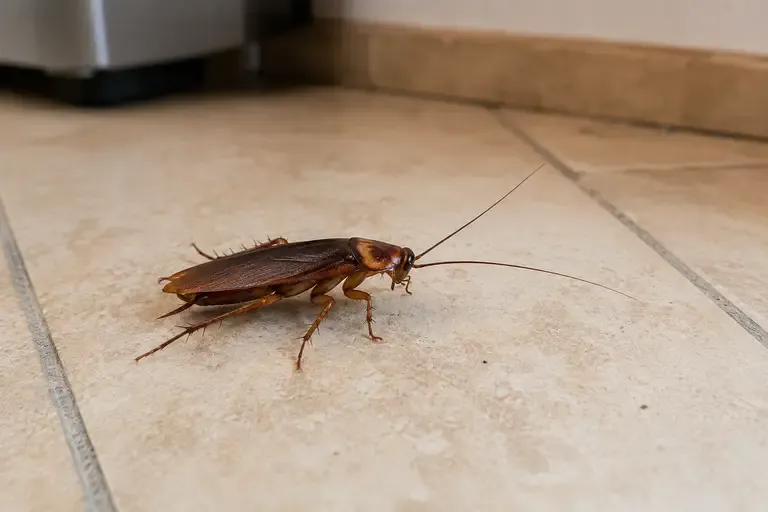
The American cockroach - “also known as the sewer roach… is the largest and most common in Arizona,” per Extension. Reddish-brown and up to 1.5+ inches, it enters homes “through drain traps from sewer systems.” The German cockroach is small (about 1/2 inch), lives indoors, and, as Extension notes, “the most likely place for a population is the kitchen.” Critically, the German roach “tends to hide in electric appliances making control difficult.”

American vs. German cockroach: different pests needing different control (UA Cooperative Extension).
Others show up too - Oriental roaches in damp water-meter boxes and cellars, and the Turkestan cockroach, which Extension notes has been in Arizona since 1982 and “is common in the Phoenix and Tucson areas.”
German vs. American - why the difference matters
Treating every roach the same is why DIY efforts fail. The American cockroach is an outside-in invader: it lives in sewers, drains, garages, and irrigation, and wanders inside through drain traps and gaps. Control focuses on sealing drains and entry points and treating the exterior.
The German cockroach is an established indoor breeder. It doesn’t need the sewer - it lives in your kitchen, hides inside appliances, and multiplies fast (all roaches lay egg cases, and German populations build quickly). That’s why German infestations resist sprays and usually need targeted professional baiting to reach the hidden colony.
Are cockroaches dangerous?
Beyond being unsettling, roaches are a genuine health concern. The EPA and CDC identify cockroach allergens - from their droppings, shed skins, and body parts - as a common trigger for asthma and allergy symptoms, particularly in children. Roaches can also contaminate food and surfaces as they travel from drains and garbage into kitchens. That’s why getting rid of them is about health, not just comfort.
Why do you have roaches, even in a clean home?
Clean homes get roaches too, because roaches follow moisture and entry points as much as food. American roaches march in from drains, sewers, and garages - Extension notes males are “attracted to lights on warm summer nights,” and “if doors and/or windows are not well sealed, roaches can, and often do, gain entrance.” Monsoon humidity and irrigation drive them indoors in the Valley. German roaches often arrive by hitchhiking in boxes, appliances, or bags, then set up in a warm, moist kitchen. Cardboard clutter, leaky plumbing, and pet food left out all help them stay.
How to get rid of cockroaches in Arizona
Roach control is a system, and University of Arizona Extension’s guidance maps it out:
- Sanitation. “Clean kitchen scraps from visible areas as well as behind and inside appliances and cabinets.” Don’t leave pet food or dishes out overnight.
- Control moisture. Fix leaks and drips; roaches need water. Reduce humidity where you can.
- Seal entry points and drains. Close gaps around doors, windows, pipes, and drain traps - the same exclusion work as our home sealing service. Closing drains helps block American roaches from sewers.
- Declutter. Move woodpiles, potted plants, and leaf litter away from the house; reduce cardboard indoors.
- Bait - skip the foggers. Extension advises: “If roaches persist, use bait stations, traps, boric acid, or other products that can be strategically placed and have low toxicity to non-target organisms.” Foggers scatter roaches without reaching the harborage.

At least 20 cockroach species are reported in Arizona; seven are established in cities.
How do you keep cockroaches from coming back?
Prevention is ongoing sanitation, moisture control, and a maintained barrier. Keep kitchens clean, fix plumbing leaks, store food and pet food sealed, and keep the exterior treated so invaders don’t re-enter. Recurring pest control matters most for American roaches that keep coming from outside - especially during the monsoon surge covered in our monsoon pest control guide. The same moisture-and-sanitation discipline that deters roaches also helps keep rodents away.
When should you call a professional?
Call a pro for German cockroaches (they hide in appliances and breed fast), for recurring sightings despite cleaning and baiting, or for heavy American-roach activity from drains and garages. A professional identifies the species, finds the harborage, and applies targeted baits and exclusion rather than surface sprays.
At Patrick’s Home Solutions, we’re locally headquartered, licensed and insured (Lic# 9794), and serve the entire West Valley. We treat the roach you actually have - and seal the ways it’s getting in.
Seeing roaches scatter when the lights come on? Call (623) 640-0405 for a free estimate, or request a quote online. We’ll identify the species, treat the source, and seal the entry points.
Frequently asked questions
Why do I have roaches in a clean house?
Roaches follow moisture and entry points, not just food. American cockroaches march in from drains, sewers, and garages, especially on warm nights and during monsoon humidity, while German cockroaches often hitchhike indoors in boxes or appliances and then breed in the kitchen.
What’s the difference between German and American cockroaches?
American cockroaches are large “sewer roaches” that invade from outside through drains and gaps; German cockroaches are small, breed indoors in kitchens, and hide in appliances. They need different treatment - sealing and exterior work for American, targeted indoor baiting for German.
Do roach foggers (bug bombs) work?
Not well. Foggers scatter roaches without reaching the cracks and appliances where they hide. University of Arizona Extension recommends strategically placed bait stations, traps, or boric acid instead, which roaches carry back to the harborage.
Are cockroaches a health risk?
Yes. The EPA and CDC identify cockroach allergens as a common trigger for asthma and allergies, especially in children, and roaches can contaminate food and surfaces. Controlling them is a health measure, not just a comfort one.
How long does it take to get rid of cockroaches?
American-roach entry can be reduced quickly by sealing drains and treating the exterior, but German-cockroach infestations take longer because they breed indoors and hide in appliances - usually requiring professional baiting over a few weeks.
Sources
- University of Arizona Cooperative Extension, Backyard Gardener #200, “Cockroaches” (2024) - https://extension.arizona.edu/sites/extension.arizona.edu/files/attachment/Cockroaches.pdf (retrieved 2026-08-05)
- U.S. Environmental Protection Agency, “Cockroaches and Pests” (asthma triggers) - https://www.epa.gov/mold/asthma-triggers-gain-control (retrieved 2026-08-05)
About the author: Patrick Hagan is the owner of Patrick’s Home Solutions, a licensed and insured pest, wildlife, weed, and pigeon control company (AZ Lic# 9794) serving the Phoenix West Valley since 2016. The team specializes in identification-first, exclusion-based pest control that keeps cockroaches, scorpions, rodents, and other pests out of West Valley homes.
Ready for a Pest-Free Home?
Don't wait for pests to become a bigger problem. Contact Patrick's Home Solutions today for fast, reliable service across the Phoenix Valley.