Arizona Monsoon Season Pest Control: Your Essential Guide
Arizona's monsoon season runs June 15 through September 30, per the National Weather Service — and it's the most disruptive pest event of the year for West Valley homeowners. Every significant storm triggers scorpion foraging surges, flushes pack rats from desert washes, hatches crickets and ants by the millions, and can dilute exterior pesticide barriers within hours.
Key Takeaways
- Arizona's monsoon officially runs June 15–September 30 (National Weather Service); the May 2026 NWS outlook forecast above-normal rainfall for the Phoenix metro
- In 2018, a peer-reviewed study in Wilderness & Environmental Medicine found 62.5% of summer scorpion sting exposures occurred within 24 hours of rain — monsoon events directly elevate indoor sting risk
- Heavy rain can wash out or dilute exterior pesticide barriers within 24–48 hours; the most effective monsoon protection starts with a fresh treatment before the first storm arrives
- In July 2024, Arizona's Department of Health Services confirmed 11 hantavirus cases — 6 fatal — with pack rats as the primary carrier; monsoon flooding is the main displacement mechanism
What Happens to Pests During Arizona Monsoon Season?
In 2018, a study published in Wilderness & Environmental Medicine (PMC/NCBI) found that 62.5% of summer scorpion sting exposures occurred within 24 hours of rain — not just in summer generally, but specifically after wet events. Monsoon doesn't just raise temperatures. It triggers a cascade of pest activity that reaches your home within hours of the first storm.
Scorpions: As of 2026, the Arizona Poison and Drug Information Center reports that Arizona receives approximately 20,000 scorpion-related calls per year — with July and August generating the highest call volume of any months. Here's the mechanism: monsoon rains trigger mass insect hatching across the West Valley. Scorpions follow the food source, moving from block wall harborage toward the home's foundation to hunt. This is why the first indoor scorpion sightings of peak season typically show up 12–36 hours after the first major storm, not during it.
Pack rats: Desert wash corridors — the natural drainage channels running through and adjacent to Surprise, the Waddell corridor, and Peoria — fill during heavy storm events. Pack rats nesting in those washes relocate to the nearest elevated shelter, which is often a garage, attic, or engine bay. In July 2024, the Arizona Department of Health Services issued a Health Alert Network notice confirming 11 hantavirus cases in Arizona — 6 fatal — with pack rats (Neotoma spp.) as the primary carrier (AZDHS HAN Alert, July 2024). Monsoon flooding is the trigger.
Crickets: Within two to four days of the first heavy monsoon rain, cricket populations emerge from the soil across the West Valley in numbers that surprise homeowners every season. In 2023, University of Arizona entomologist Dr. Gene Hall confirmed that "good rain means bugs are out in big numbers" — and UA's Insect Diagnostics Clinic receives a surge of identification requests each monsoon season (UA News, 2023). Crickets accumulate near exterior lights, garage entries, and doorframes. Dense cricket concentrations at the home's perimeter create a hunting ground for black widow spiders, which are a consistent secondary threat in garages and block wall gaps.
Ants and weeds: Multiple ant species forage dramatically more aggressively within 24–48 hours of monsoon rain as colonies expand and re-emerge at the surface. Weed seeds — including seeds dormant for years — can germinate within 24–48 hours of a significant rain event. That rapid post-monsoon ground cover provides harborage for scorpions, pack rats, and insects directly along the home's foundation. Rain triggers germination, which builds an insect food source, which draws scorpions to your walls. The chain runs fast.
For a full breakdown of what West Valley homeowners face year-round, see our year-round pest control guide for West Valley homes.
How Do You Prepare Before the Monsoons Hit?
In its May 21, 2026 Arizona Monsoon Outlook, the National Weather Service forecast above-normal rainfall for the Phoenix metro through August and September. That means a higher probability of multi-day heavy events early in the season — and more urgency to have protection in place before June 15, not after.
1. Schedule treatment before mid-June. Exterior residual pesticide treatments remain effective for 60–90 days under normal conditions. A treatment applied in the week before monsoon onset is at full efficacy through late August — covering the July–August scorpion foraging peak and cricket hatch window. A treatment applied in April is entering its final weeks when July's first storms arrive.
2. Walk the perimeter and check entry points. Look at weep screeds along the base of stucco walls, the garage door seal's contact with the threshold, and any utility penetrations through exterior walls. Monsoon humidity causes slight stucco expansion and contraction. Gaps that were negligible in dry conditions can open enough for a bark scorpion — which can compress to the width of a credit card — to enter.
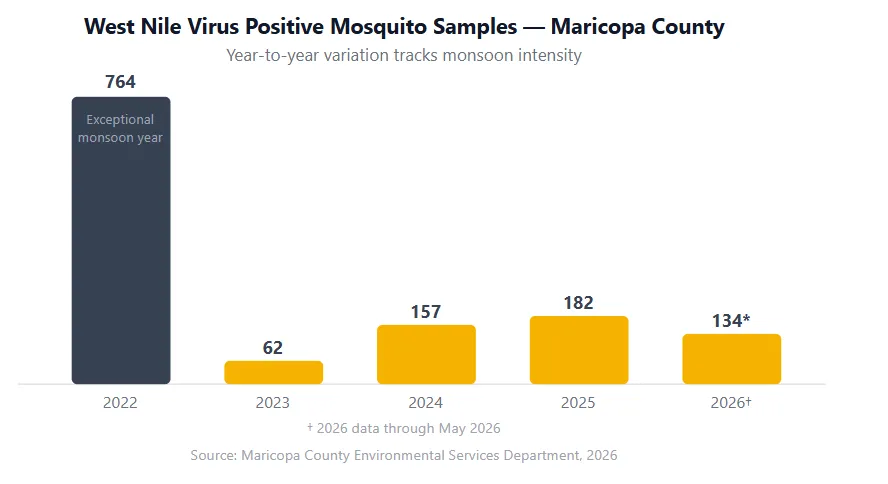
3. Eliminate standing water before the first storm. Identify every spot on your property where water pools: pool equipment pads, flat-bottomed planters, ground irrigation drip zones, low spots near the foundation. Standing water breeds mosquitoes within 24–48 hours. In 2025, Maricopa County Environmental Services confirmed 182 positive West Nile virus mosquito samples in Maricopa County — with peak exposure from May through October (Maricopa County Environmental Services, 2025 data).
4. Clear debris from block wall bases. Leaf litter, wood offcuts, stored pots, and any material piled against the block wall creates scorpion harborage going into the summer clustering period. Clear a clean zone at the wall base before the season starts.
5. Treat visible weeds before the first rain. Any weeds present at monsoon onset will harbor insects within days of the first storm. A post-emergent treatment on visible weeds in early June is effective. Waiting until after monsoon rains means treating established harborage that's already supporting insect activity.
For more on protecting your home from scorpions specifically, see our scorpion control services.
What Should You Do During and After Each Storm?
Each significant monsoon storm — anything above 0.5 inches — can wash or dilute exterior pesticide barriers within 24–48 hours. That makes the window immediately after a storm the most important 72 hours of pest management in any given week. Here's what to check and when.
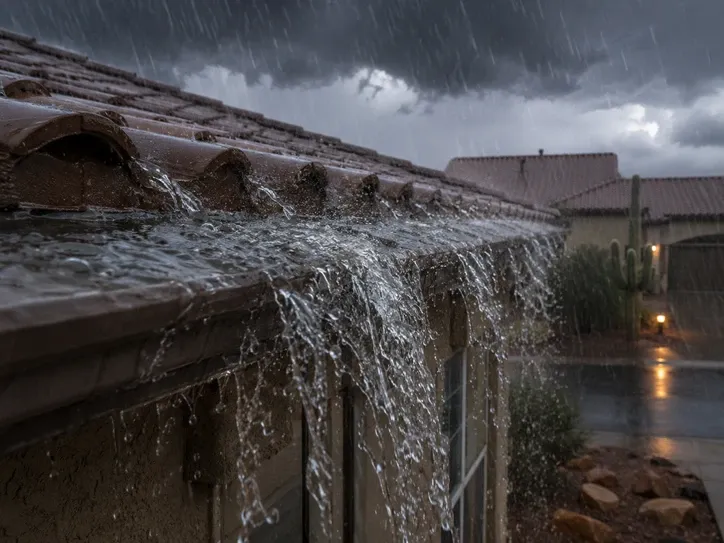
Within 6 hours: check for standing water. Clear any pooled water from pool equipment pads, planters, AC drip zones, and low spots near the foundation. Mosquitoes can lay eggs within hours and begin hatching within 24–48 hours in standing warm water.
That evening: run a UV scan on exterior block walls. Bark scorpions glow bright blue-green under ultraviolet light. Walk the block walls within three feet of your home's foundation between 8pm and 11pm. Scorpions concentrated near the foundation after a storm is the clearest signal that your treatment barrier has been compromised and a retreatment call is warranted.
Daily: shake out shoes, clothing, and towels. Scorpions that enter the home through weep screeds and utility gaps shelter in static fabric and footwear during daylight. This habit eliminates most indoor sting risk without any product.
Switch exterior lights to yellow or amber spectrum. White and blue-spectrum bulbs attract the flying insects and crickets that monsoon events hatch in large numbers. Yellow bulbs reduce the insect congregation at your perimeter — which reduces the scorpion hunting ground directly adjacent to your walls. It's a simple swap that most West Valley homeowners haven't made.
When to call: If indoor scorpion sightings increase after a storm despite active quarterly service, the barrier has likely been compromised. Call for a retreatment rather than waiting out the rest of the quarter.
For more detail on scorpion behavior and treatment timing, see the complete scorpion control guide for Surprise.
What Should You Check After Monsoon Season Ends?
Mid-September through October is the second most important pest management window of the year. Rodent pressure increases as temperatures drop and pack rats seek permanent shelter. Weed germination surges again. And scorpions begin clustering in block walls — the harborage behavior that carries them through winter.
Rodent inspection — before anything else. Check the garage, attic access, vehicle engine bays, and outdoor storage for pack rat middens (dense nesting piles of dried plant material, fabric scraps, and debris). A midden built during monsoon that goes undetected through fall becomes an established colony by spring. Don't disturb it yourself — pack rat droppings are a hantavirus exposure risk. Call a licensed pest control operator who uses respiratory protection.
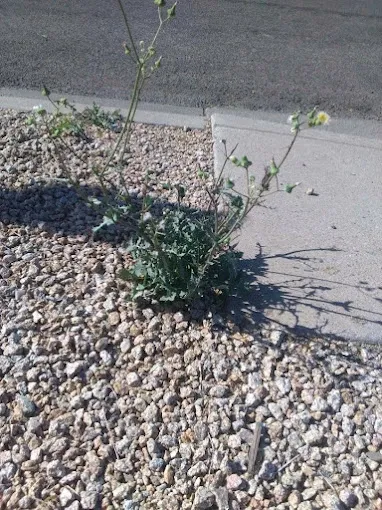
Address the weed surge immediately. The weeks after monsoon ends trigger a second major germination event as temperatures moderate. Post-emergent treatment on visible weeds in early October addresses that surge. The fall pre-emergent window — October 15 through November 15 — handles winter annual weeds like London rocket and filaree. Both windows matter.
Schedule your fall treatment. A quarterly treatment placed in September or early October covers the scorpion clustering period and maintains protection through the winter months — when scorpions are concentrated in block walls but still active on warm evenings.
For homeowners in Surprise and the surrounding West Valley, see our service area page for Surprise and the West Valley.
──────────────────────────────────────────────────
Schedule Before the Monsoon Peaks
The 2026 NWS outlook calls for above-normal rainfall in the Phoenix metro. The most effective window to protect your home is now — before the first storm dilutes your barrier and before the first cricket hatch draws scorpions to your perimeter.
Patrick's Home Solutions serves Surprise, Peoria, El Mirage, Glendale, and the entire Phoenix West Valley. AZ ODA License #9794. BBB A+ accredited since 2020. Same-day and next-day scheduling.
Call (623) 640-0405 for a free estimate before the monsoon peaks.
──────────────────────────────────────────────────
Frequently Asked Questions
When does monsoon season start and end in Arizona?
Arizona's monsoon season officially begins June 15 and ends September 30, as designated by the National Weather Service. Moisture arrives primarily from the Gulf of California and Gulf of Mexico. Peak intensity is typically July and August. In its May 2026 outlook, the National Weather Service forecast above-normal rainfall for the Phoenix metro through the season.
Do scorpions really get worse during monsoon season?
Yes — measurably. In 2018, a study published in Wilderness & Environmental Medicine found that 62.5% of summer scorpion sting exposures occurred within 24 hours of rain. Monsoon events trigger insect hatching that draws scorpions to your home's perimeter. Interior sightings typically increase in the 12–36 hours after each storm, not during it.
How do I keep pests out of my house during monsoon season?
Four steps: keep exterior residual treatment current — rain events can compromise the barrier within 24–48 hours; eliminate standing water within 6 hours of each storm; shake out shoes and clothing before wearing; switch exterior lights to yellow or amber spectrum to reduce the insect congregation that draws scorpions to your walls.
What should I do if I find a pack rat nest after a monsoon?
Don't disturb it yourself. In July 2024, the Arizona Department of Health Services confirmed 11 hantavirus cases in Arizona — 6 fatal — with pack rats as the primary carrier. Disturbing dried droppings or nesting material releases airborne particles. Call a licensed pest control operator who uses respiratory protection for removal. Never dry-sweep or vacuum a rodent nest.
Is post-monsoon weed control different from normal weed treatment?
Yes. Monsoon moisture triggers germination of seeds dormant for years. Post-emergent herbicide (applied to visible weeds) is the right tool for October treatment. Pre-emergent (applied before germination) handles the fall window for winter annual weeds like London rocket and filaree. Both windows typically open in October.
──────────────────────────────────────────────────
Monsoon season in Arizona isn't something that happens to your yard and then stops. It reshapes the pest environment around your home — triggering hatches, flushing rodents, germinating weeds — and the window to get ahead of it is narrow. June 15 is the official start. The best preparation happens before that date.
On the Patrick's Home Solutions blog:
- Year-round pest control guide for West Valley homes
- Scorpion control in Surprise, AZ — the complete guide
- Pre-emergent vs. post-emergent weed control in Arizona
Written by Patrick Hagan, Licensed Pest Control Operator | AZ ODA License #9794 | ROC #356260 Patrick's Home Solutions has served Surprise, AZ and the Phoenix West Valley since 2016. BBB A+ Accredited. 4.9 stars across 432+ Google reviews.
──────────────────────────────────────────────────
Sources
- National Weather Service, Arizona Monsoon Season Definition, retrieved 2026-05-29, https://www.weather.gov/fgz/monsooninfo
- National Weather Service, 2026 Arizona Monsoon Season Outlook, May 21, 2026, retrieved 2026-05-29, https://www.weather.gov/media/twc/monsoon/2026ArizonaMonsoonOutlookOnePagerEnglish.pdf
- Curry S.C. et al., "Factors Contributing to Scorpion Envenomation in Wilderness Settings," Wilderness & Environmental Medicine, 2018, retrieved 2026-05-29, https://pmc.ncbi.nlm.nih.gov/articles/PMC6314927/
- Arizona Poison and Drug Information Center, Scorpions, retrieved 2026-05-29, https://azpoison.com/venom/scorpions
- Arizona Department of Health Services, Hantavirus Health Alert Network (HAN) Notice, July 2024, retrieved 2026-05-29, https://www.azdhs.gov/documents/preparedness/epidemiology-disease-control/vector-borne-zoonotic-diseases/hantavirus-han.pdf
- Maricopa County Environmental Services Department, Mosquito-Borne Disease Statistics, retrieved 2026-05-29, https://www.maricopa.gov/2476/Mosquito-Borne-Disease-Statistics
- University of Arizona News, Bug Bonanza: 7 Big, Colorful Critters to Spot This Monsoon Season, 2023, retrieved 2026-05-29, https://news.arizona.edu/news/bug-bonanza-7-big-colorful-critters-try-spot-monsoon-season
About the author

Patrick Hagan
Owner, Patrick's Home Solutions
Patrick Hagan is the owner of Patrick's Home Solutions, a licensed and insured pest, wildlife, weed, and pigeon control company (AZ Lic# 9794) serving the Phoenix West Valley since 2016. The team specializes in identification-first, exclusion-based pest control that keeps cockroaches, scorpions, rodents, and other pests out of West Valley homes.
Read Patrick's storyReady for a Pest-Free Home?
Don't wait for pests to become a bigger problem. Contact Patrick's Home Solutions today for fast, reliable service across the Phoenix Valley.