Scorpion Spiders (Sun Spiders) in Arizona Homes: What They Are and How to Keep Them Out
A "scorpion spider" in an Arizona home is a desert hunter that wanders in after insects, and keeping it out starts with what draws it to your walls. Patrick Hagan, owner of Patrick's Home Solutions in Surprise, answers what West Valley homeowners and renters ask after finding one: what to call it, whether it bites, why it came in and when to call for help.
Key Takeaways
Treat the pale, long-legged runner as its own kind of arachnid: a solifugid, related to spiders and scorpions but neither one.
Look closely before you relax, because indoors a sun spider is easy to confuse with a scorpion or a big hunting spider.
Set the venom worry aside: a sun spider has no venom glands, so a bite puts nothing toxic into the skin.
Expect them after dark, since sun spiders shelter in burrows and under rocks by day and come out at night to hunt.
What is the "scorpion spider" you found in your house?
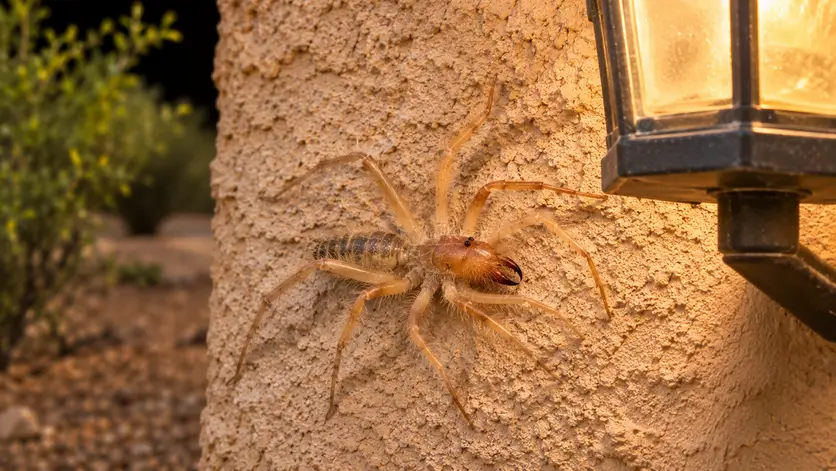
In an Arizona home, a "scorpion spider" is most likely a solifugid, often called a sun spider. It is an arachnid that sits in a group of its own, apart from true spiders and scorpions.
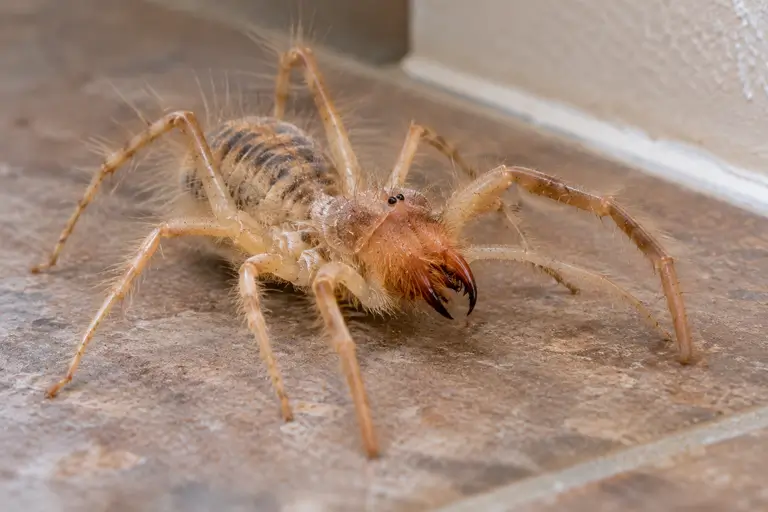
Look for a tan, hairy body with oversized jaws jutting from the head. It runs fast and holds its long, leg-like front feelers (pedipalps) out ahead of it, which is why it can seem to have extra legs. Most that turn up inside a West Valley home are small enough to trap under a drinking cup, though the spread legs and pedipalps make one look bigger than it is. It spins no web and carries no stinger.
Sun spider, camel spider or wind scorpion: what are they mistaken for?
Sun spider, camel spider and wind scorpion are all names for the same animal, and the last two are misleading. Indoors it is easy to confuse with a scorpion or a large hunting spider.
Look at the back end first.
What to look at | Sun spider | Scorpion | Spider |
|---|---|---|---|
Rear end | Soft, rounded abdomen, no tail | Segmented tail curled up, ending in a stinger | Rounded abdomen with silk spinnerets |
Front end | Huge jaws pointing forward | A pair of pincers | Small fangs tucked under the head |
Silk | None | None | Spins silk |
Any tail with a stinger means scorpion. A soft, rounded rear with huge jaws up front means you have a sun spider.
Are sun spiders venomous, and do they bite?
No. Sun spiders have no venom glands, so a bite delivers no venom.
They can bite, though. Those big forward jaws are built for crushing insects, and one that is picked up or pinned against skin may pinch hard enough to hurt or break the skin. Treat it like any small cut: wash it with soap and water, then watch it for signs of infection. Left alone, a sun spider runs from people rather than toward them.
Venomous spiders are a separate group. The National Pest Management Association's spider guide names the brown recluse, black widow and hobo spider.
Where do sun spiders live, and why do they come indoors in the West Valley?
Desert ground is home for sun spiders. They spend the day in burrows or under rocks, then come out at night to hunt. Across the West Valley, from Surprise and El Mirage out to Buckeye and Wittmann, that puts them in the same yards where people live. One usually ends up indoors by accident, chasing prey in the dark and following it under a door or into an open garage.
Timing follows their food. Sightings tend to pick up in the warm months, and the summer monsoon, when rain brings crickets and other night insects out in numbers, is a common time to find one near a porch light or in the garage.
Food is not hard to find around homes here. In our experience, homes in the West Valley mostly deal with scorpions, crickets and general pests, and new home builds mainly deal with scorpions and crickets. A yard with plenty of insect activity gives a sun spider a reason to hang around the foundation.
What does a sun spider indoors say about bark scorpions and other pests?
Finding one indoors tells you two things. There is prey active around your foundation, and there is an opening wide enough for a small arachnid to follow it inside.
A bark scorpion can use that same opening, and the CDC/NIOSH guidance on insects and scorpions warns that stings from a bark scorpion can be life-threatening. So take the sighting as a reason to check for scorpions after dark too.
Spraying for the sun spider alone misses why it came. Monthly or quarterly general pest control keeps down the insects it feeds on, and if scorpions turn up as well, our scorpion control work covers them.
Keeping them out: lights, door gaps and the insects they hunt
Keep sun spiders out by cutting down the night insects near your doors and closing the gaps those insects lead them through. Since sun spiders and scorpions both hunt crickets, cricket control belongs in the same plan.
Lights. Porch and patio lights draw flying insects to your walls after dark, and the sun spider follows them. Motion-sensor fixtures or yellow bug bulbs pull in fewer.
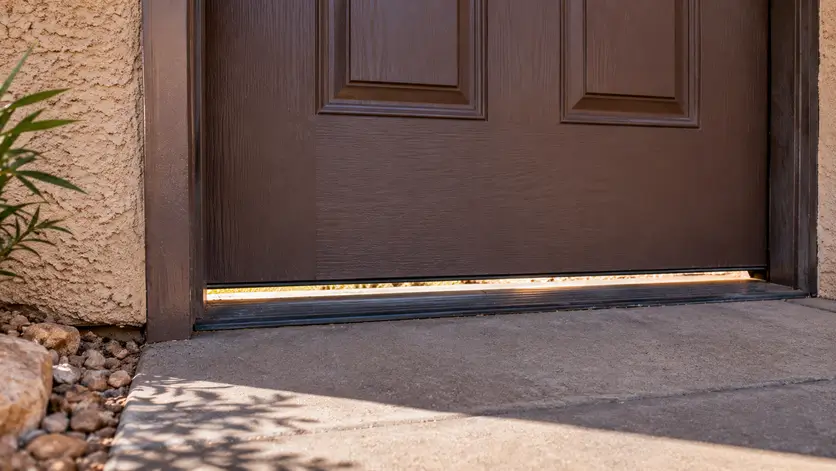
Door gaps. If daylight shows under an exterior door, a sun spider can fit through. Fit a door sweep and replace worn weatherstripping. Keep the garage door down at night, with its bottom seal intact.
Cover by the foundation. Rocks, boards and stacked pots against the house give crickets and sun spiders a daytime hiding place. Move them away from the walls.
Spot a web or a glossy black body? Then what you found is no sun spider. Our guide to venomous spiders in Arizona covers those.
When should you call a pest control company about sun spiders?
Call when sun spiders keep turning up indoors, or when you find one and cannot tell whether it is a sun spider or a scorpion. A single sun spider that wanders in once can be trapped under a cup and carried outside. According to the National Pest Management Association, a professional can inspect your home, confirm the species and recommend a course of control.
The prey that pulls sun spiders indoors can come back fast once treatment stops. A client in Surprise had stopped pest control to do it themselves, and within a month they saw crickets and then scorpions in the house. They called us to come out and spray and set up a monthly treatment plan. We sprayed and then dusted the area, including the outside of the garage door.
Our general pest control treats the inside of the home and the yard around it, then follows up after the first treatment. We give you the cost over the phone. After that, we inspect the home and talk with you before recommending a plan.
There is no charge for our scorpion or home seal inspections. If the visit turns up open gaps, our Scorpion Home Seal closes the ones sun spiders and scorpions use to get in. Patrick's Home Solutions holds AZ license #9794. To set up a visit, contact us or call 623-640-0405.
Sources
Insects and Scorpions at Work | Outdoor | CDC, CDC/NIOSH, retrieved 2026-10-15.
Spider Identification Guides: Spider Control & Extermination, National Pest Management Association (pestworld.org), retrieved 2026-10-15.
About the author

Patrick Hagan
Owner, Patrick's Home Solutions
Patrick Hagan is the owner of Patrick's Home Solutions, a licensed and insured pest, wildlife, weed, and pigeon control company (AZ Lic# 9794) serving the Phoenix West Valley since 2016. The team specializes in identification-first, exclusion-based pest control that keeps cockroaches, scorpions, rodents, and other pests out of West Valley homes.
Read Patrick's storyReady for a Pest-Free Home?
Don't wait for pests to become a bigger problem. Contact Patrick's Home Solutions today for fast, reliable service across the Phoenix Valley.