How to Keep Lizards Out of Your Arizona Home
Lizards stay out of an Arizona home when it offers them no way in and nothing to eat near its walls. This page is for homeowners and renters in Surprise and the rest of the West Valley who keep finding lizards indoors. It covers why they come in, whether one inside is a worry, and when to get a pro involved.
Key Takeaways
A lizard indoors is following its food, so insects gathering by your doors mean lizards will soon follow them inside.
Don't count on a lizard leaving by itself; it lingers as long as the house keeps feeding and hiding it.
Use pest control to cut down the insects around the house, since that takes away the lizard's reason to stay.
Confine today's lizard to one closed-off room, then open a single exit so it can find its own way out.
Match the material to each gap: weep holes take mesh, because caulk would block the moisture they are there to release.
Why do lizards end up inside homes?
Lizards come indoors chasing food. They eat insects, so a house with crickets, moths or spiders near the doors gives them a reason to stay close, and any opening gives them a way in. Crickets around the foundation and porch lights are one of the meals that pull them toward your walls.
The opening can be small. A worn door sweep is enough for a little lizard to slip under. So is the space around a pipe where it passes through an exterior wall. The EPA's do's and don'ts of pest control name sealing cracks and crevices around a home's exterior as a key step in keeping pests out, and those are the same gaps you close when scorpion-proofing a home.
Keeping them outside matters: the Centers for Disease Control and Prevention says lizards and other reptiles can carry Salmonella germs that make people sick, a health risk once they get inside.
Since a lizard indoors usually points to insects and gaps outside, we treat the home and the surrounding outdoor areas, not just the room where it showed up.
How long will a lizard stay in your house?
No set length of time applies. A lizard stays as long as your house gives it food and cover; it leaves once it finds a way back out. That makes it worth acting the day you see one rather than waiting it out. Here is what decides how long it lingers:
What the lizard finds indoors | Effect on how long it stays |
|---|---|
Insects to eat | Gives it a reason to stick around |
Clutter or gaps behind appliances | Gives it cover and makes it hard to spot |
An open door or the gap it used | Lets it leave on its own |
Can a pest control company get rid of lizards?
Yes, though mostly by going after what the lizard eats rather than the lizard itself. Once the insects are gone, a house gives a lizard little reason to hang around. The lizard control guide from solutionsstores.com says that general pest control that cuts the insect population way down leads lizards to leave on their own, without anyone having to harm them.
That insect work is what our general pest control service does. We run it on a monthly or quarterly schedule, depending on what your home needs. The aim is to clear the insects behind the problem you have now, then keep them from building back up through the year.
Whoever you hire, the EPA's advice on bringing in outside help is to ask them to find and correct the source of the problem before they apply pesticides. The operator should also be able to give you information about the chemical they use, such as its material safety data sheet.
Steps to get a lizard out of the house today
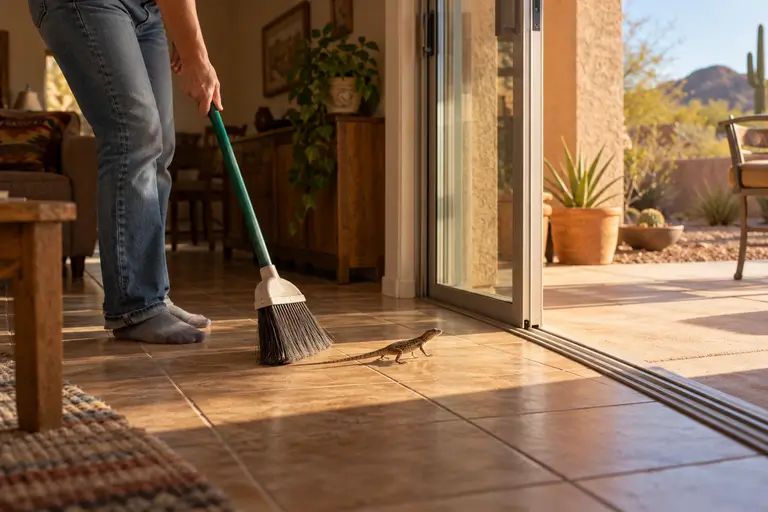
Shut the lizard into one room, then give it one clear way out.
Close the interior doors so the lizard stays in the room where you saw it.
Open that room's outside door or slider wide, and move pets to another room.
Steer it toward the opening with a broom. Never grab it by the tail, which can break off.
If it hides, cover it with a plastic container, slide stiff cardboard underneath and carry it outside.
Wash your hands and wipe the surfaces it crossed.
Sealing the gaps lizards use to get in
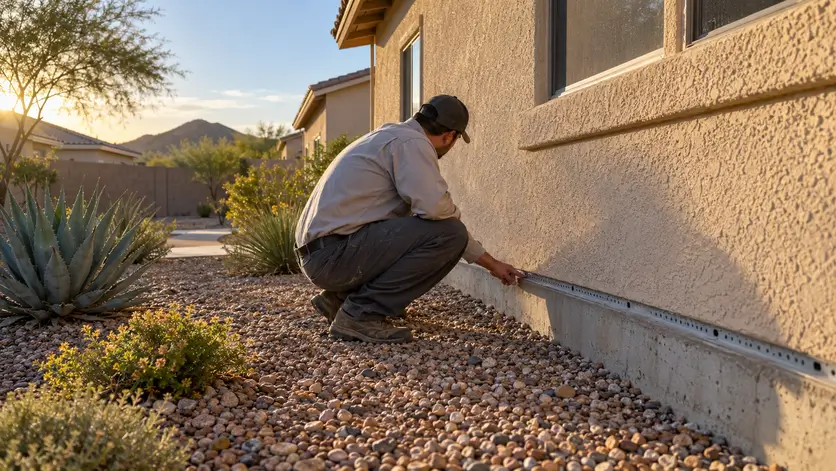
Walk the outside of the house and close each gap with a material that suits it.
Garage door: replace a cracked bottom seal, and add weatherstripping along the sides wherever daylight shows through.
Weep holes: these small drain openings at the base of the wall let moisture out, so cover them with mesh, never caulk.
Door frames: fill gaps between the frame and the wall with exterior caulk, then replace flattened weatherstripping.
Screens and vents: patch torn window screens and make sure the dryer vent flap closes fully.
We also offer a scorpion home seal service. We give the cost over the phone, then inspect the house and talk it through with you before recommending a plan.
How do you cut down the insects that draw lizards to your home?
Take away what insects need along your walls, and the lizards lose their reason to come close. Most of that work happens in the yard and at the foundation:
Outdoor lights: switch porch and patio fixtures to yellow bug bulbs or put them on a timer. Bright white light pulls flying insects and crickets toward your doors after dark.
Irrigation: fix leaking drip emitters and keep sprinklers from soaking the soil right against the house. Damp ground near the slab holds crickets.
Debris against the walls: move woodpiles and stacked pots a few steps out from the house, since insects shelter under them during the day.
Garage and storage: keep cardboard boxes off the floor and away from the garage door, where crickets settle in.
When should you call a West Valley exclusion pro for lizards?
Call one when lizards keep showing up indoors after you have sealed the gaps you can see and cut back the insects outside. Repeat visitors mean there is an opening you missed, or one you cannot reach safely, such as along the roofline. An exclusion pro finds and closes the openings an animal uses to get in. The EPA's Integrated Pest Management principles treat sealing entry points and removing food, water and shelter as the primary way to keep pests like lizards out of a building, so a pro should look at both.
Patrick's Home Solutions is a licensed and insured pest and wildlife control company (AZ Lic# 9794). We have served the Phoenix West Valley since 2016, from Surprise and El Mirage out to Goodyear and Buckeye. Our wildlife exclusion service closes the openings animals use to get into a home.
What affects the cost of lizard-proofing a home?
What you pay to lizard-proof a home depends mostly on how many openings your house has and how hard they are to reach. A few things move the total:
Size of the house: more exterior wall means more door frames and vents to check and close, and more weep holes to screen.
Number of gaps found: a house with one worn door sweep needs far less material and labor than one with gaps at every door and along the garage.
Where the gaps are: openings along the roofline take ladders and more time than a door frame at ground level.
Insect pressure: if crickets are heavy around the foundation, insect treatment gets added to the sealing, because a sealed house with food outside still draws lizards to the walls.
We do not charge for a scorpion or home seal inspection, so you see what your house needs before you pay for any work. Call us at 623-640-0405 or send us a message to set up a look at your home.
Sources
Reptiles and Amphibians | Healthy Pets, Healthy People | CDC, Centers for Disease Control and Prevention, retrieved 2026-10-13.
Integrated Pest Management (IPM) Principles | US EPA, U.S. Environmental Protection Agency, retrieved 2026-10-13.
Do's and Don'ts of Pest Control | US EPA, epa.gov, retrieved 2026-10-13.
Lizard Control: How To Get Rid of Lizards, solutionsstores.com, retrieved 2026-10-13.
About the author

Patrick Hagan
Owner, Patrick's Home Solutions
Patrick Hagan is the owner of Patrick's Home Solutions, a licensed and insured pest, wildlife, weed, and pigeon control company (AZ Lic# 9794) serving the Phoenix West Valley since 2016. The team specializes in identification-first, exclusion-based pest control that keeps cockroaches, scorpions, rodents, and other pests out of West Valley homes.
Read Patrick's storyReady for a Pest-Free Home?
Don't wait for pests to become a bigger problem. Contact Patrick's Home Solutions today for fast, reliable service across the Phoenix Valley.