Property Pest Inspection in Surprise, AZ: What Gets Checked
A property pest inspection in Surprise covers the inside of your home and the yard around it, looking for pests and the traces they leave. This page is for West Valley homeowners and renters deciding whether to book one. It covers which pests the visit looks for, what happens afterward and how to pick the person doing it.
Key Takeaways
- Before the inspector arrives, note where you have seen pests and, if you have pets, where they sleep and rest indoors and out, since that is where the search starts.
- Plan for a second flea visit from the start, because eggs can hatch after the first treatment and the follow-up deals with them.
- Expect the foundation line and yard to be checked even in a home without pets, because scorpions and termites both start outside.
What is a property pest inspection, and when does it make sense?
A property pest inspection is a walk-through of your home and lot to identify which pests are present and how far they have spread, so the treatment matches what was found. It makes sense once you have seen pest activity and want a plan instead of a guess.
Inspecting before treating is the order the EPA's Integrated Pest Management principles set out: find out what is there, then manage the damage by the most economical means with the least possible hazard. We aim to solve today's problem first, then protect the home with ongoing pest control service.
The inspection also shapes the price. Our flea and tick services typically range from $170 to $410, depending on the size of the home and property and how severe the infestation is, and the walk-through is where we see what a given home needs. Our Arizona pest control cost guide goes deeper into pricing.
Be more careful when the offer comes to you. If a stranger at your door offers to inspect, our guide to door-to-door pest control covers how to vet the offer.
What does the inspector check inside and around the house?
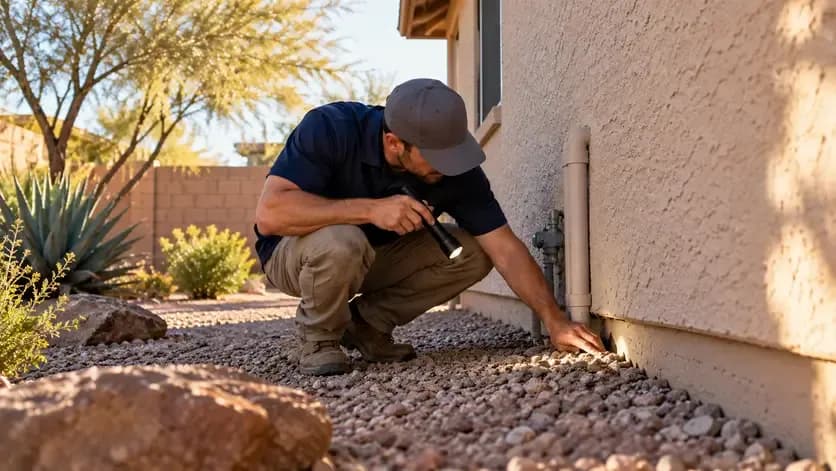
The inspector checks the inside of the house, the yard and the foundation line. We look at both the interior and exterior of the property, and we ask you where your pets spend time and where you have seen flea or tick activity, so the search starts there. Indoors, that means a pet's bedding and the rugs or couches it uses. Outside, it means the shaded spots where a dog or cat rests and the path it walks along the fence.
No pets? Then the walk-through follows wherever you have seen activity, plus the places pests get in, such as gaps under doors and the openings where pipes enter the walls. Scorpions slip through openings that small. In the garage and attic, droppings and gnawed or shredded material point to rodents.
The foundation line deserves a look too, since termites build mud tubes up from the soil there. The U.S. Environmental Protection Agency's advice on keeping termites away from a house tells homeowners to keep that soil dry with grading and working gutters and downspouts, keep vents clear of plants and shrubs off the walls, and never stack firewood next to the house.

Which West Valley pests is an inspection looking for?
An inspection with us looks for the pests we treat across the West Valley, from Surprise and Sun City out to Buckeye and Waddell. Scorpions and fleas top the list for many homes, along with ticks, pigeons, wildlife and the household pests a general service keeps out.
Naming the pest comes first. The EPA's tips for selecting a pest control service say pesticides should not be applied unless the pests are present and cannot be controlled by other means. Scorpions found on the walk-through are handled through our scorpion control service.
We offer monthly or quarterly pest control; for fuller protection we recommend monthly service for at least three months.
What comes after the inspection: treatment, sealing or follow-up visits?
After the inspection comes a treatment plan, and for fleas and ticks that usually means two visits: the first treatment, then a follow-up about 14 days later. We give the cost over the phone. The on-site look and a conversation with you then set how much treatment the home needs, based on the size of the home and lot, where your pets spend time and how extensive the infestation appears.
The second visit matters because flea and tick eggs can hatch after the first treatment. We charge around $60 for that follow-up, depending on the size of the home.
When the walk-through turns up gaps where pests get inside, closing them is the work of our scorpion home seal service.
What warning signs turn up during an inspection?
An inspection's warning signs are mostly the traces pests leave behind, and they often show up before anyone in the house has seen the pest itself.
- Flea dirt. Fine black specks on pet bedding or carpet. Pressed onto a damp paper towel, they smear reddish-brown, because they are digested blood.
- Bites low on the legs. Small itchy bumps around the ankles of people in the household.
- Droppings and nest debris. Shredded insulation or a pile of sticks in a garage or attic points to rodents. Our guide to roof rats and pack rats in Arizona covers telling the two apart.
- Mud tubes on the foundation. Thin dirt tunnels running up a wall from the soil are a termite sign worth a closer look.
- Pests on a pet after yard time. That puts the yard on the list, not just the rooms.
What affects the cost of an inspection and any treatment?
What you pay comes down to how much of the property needs treating, inside and out, and how many visits it takes before the pests are gone. When pets spend time outdoors, the yard is part of the job, so it counts toward the cost alongside the house.
One home we treated shows how that adds up. A customer fostering stray kittens had fleas in the living room and in the backyard, so both areas were treated. We charged $170 for the initial treatment and $60 for the follow-up 14 days later, and that follow-up included a complimentary follow-up service. By the end of that second visit the flea problem was resolved, for a total of $230.
Two visits usually handle the immediate flea problem, and for more persistent infestations we recommend up to five treatments, counting three months of general pest treatments.

How do you choose who inspects your property?
- Ask for the license number. Ask for the company's Arizona license number and check it before any work starts.
- Ask whether the yard is part of the inspection. Fleas living where a dog rests outside will come back indoors if only the rooms get treated, and scorpions find their way in from the yard as well.
- Match the inspector to the report. If a lender wants a clear inspection report for an FHA loan, HUD's pest control reference guide says all improvements within the property lines must be inspected and be free of active infestation. That page sits in HUD's archives, so confirm the current requirement with your lender. The report concerns termites and other wood-destroying insects, so ask whether the company you call inspects for them.
We are a licensed and insured pest, wildlife, weed and pigeon control company, Arizona license #9794, serving the West Valley since 2016. To have your home in Surprise or a nearby town checked, get in touch with us or call 623-640-0405 and tell us what you have been seeing.
Frequently Asked Questions
What is the worst pest to have in your house?
For the house itself, termites, because they eat into the structure out of sight and the damage is often found late. For the people living there, it depends on the household. In the West Valley, scorpions are a common worry because they get in through small gaps and can sting, while pet owners usually feel fleas the most, since they bite people and animals alike.
Which pests are the most expensive to remove?
Pests that get into the structure of the house cost the most, because the bill covers the treatment plus repairs to whatever they damaged. Termites are the clearest case, and rodents that shred attic insulation work the same way. The U.S. Environmental Protection Agency's termite guidance lists liquid soil treatments and bait systems among the control methods, and either one is a bigger job than a routine perimeter spray.
Is it worth paying for pest control?
Yes, you don't want the problem to get bigger than what you can fix at home.
The EPA's tips for selecting a pest control service say many household pests can be controlled with proper sanitation and good home maintenance. An extensive infestation, or a pest that is difficult to control, is where they say a pest control company is needed.
Sources
- Termites: How to Identify and Control Them | US EPA, U.S. Environmental Protection Agency, retrieved 2026-10-05.
- Integrated Pest Management (IPM) Principles | US EPA, U.S. Environmental Protection Agency, retrieved 2026-10-05.
- Tips for Selecting a Pest Control Service | US EPA, epa.gov, retrieved 2026-10-05.
- HUD Archives: HOC Reference Guide -- Pest Control (Page 1-23), archives.hud.gov, retrieved 2026-10-05.
- What is a Termite Inspection? | Importance of Termite Inspections, pestworld.org, retrieved 2026-10-05.
Ready for a Pest-Free Home?
Don't wait for pests to become a bigger problem. Contact Patrick's Home Solutions today for fast, reliable service across the Phoenix Valley.