
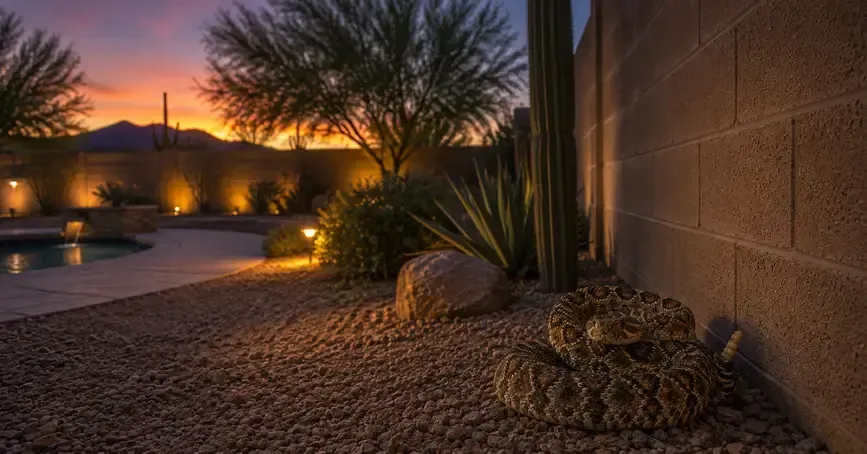
How to Keep Rattlesnakes Away From Your Arizona Home: A West Valley Prevention Guide
Key Takeaways
- The most reliable way to keep rattlesnakes out is to remove what draws them, rodents, water, and cool hiding spots, and to physically block entry with quarter-inch snake fencing buried a few inches into the ground.
- Arizona has 13 species of rattlesnake more than any other state, according to the Arizona Game & Fish Department.
- Snakes are most active here from roughly March through October, and in summer heat they shift to early mornings and evenings.
- Roughly 1 in 4 Arizona rattlesnake bites happens during gardening or yard work, per the Arizona Poison & Drug Information Center, so prevention is also personal safety.
- Repellent powders and ultrasonic “snake away” gadgets do not work. Habitat control and exclusion do.
If you live anywhere along the desert fringe of the West Valley, Surprise, Peoria, Buckeye, Goodyear, Anthem, a rattlesnake in the yard is not a freak event. It is a seasonal reality. The good news: rattlesnakes come into yards for predictable reasons, and when you take those reasons away, they stop showing up. This guide walks through why they appear, when the risk peaks, and the exact steps that keep them off your property.
Why do rattlesnakes come into West Valley yards?
Rattlesnakes enter yards looking for three things: food, water, and shelter from the heat. A yard that offers all three, especially on the edge of open desert or near a wash, becomes a regular stop. According to the University of Arizona, snakes are “often following their food source,” which in Arizona usually means rodents like pack rats and roof rats. Where rodents thrive, snakes follow.
The West Valley is prime habitat. New developments push right up against desert washes and undeveloped lots, and mature neighborhoods offer block walls, irrigation, and decorative rock, all of which create the cool, sheltered pockets a snake wants during a 110-degree afternoon. The Western diamondback, Arizona’s most common rattlesnake, is found “throughout the state, from the deserts to the grasslands,” which is why it turns up in suburban yards so often.
The takeaway is encouraging: a snake in your yard is a signal, not bad luck. It usually means something on your property is feeding or sheltering wildlife and that is something you can fix.
When is rattlesnake season in Arizona?
Rattlesnakes in Arizona are most active from about March through October, and bite reports climb fast once temperatures warm. The Arizona Poison & Drug Information Center tracked bites jumping from nine in March to 24 in April in one spring — the kind of month-over-month surge that defines snake season.
Summer changes when you’ll see them, not whether you will. In extreme heat, rattlesnakes become largely nocturnal and crepuscular, most active in the early mornings and evenings, then sheltering through the hottest part of the day. That matters for timing your yard work and walking the dog: dawn and dusk are exactly when an unseen snake is most likely to be out and moving.
How dangerous are Arizona rattlesnake bites, really?
Rattlesnake bites are serious and occasionally life-altering, but rarely fatal with prompt care. Nationwide, the CDC reports that 7,000-8,000 people are bitten by venomous snakes each year in the U.S., and about 5 die but it also notes that 10 to 44% of rattlesnake bites lead to lasting injury, such as permanent loss of use of a finger. The danger is less about death and more about avoidable, costly harm.
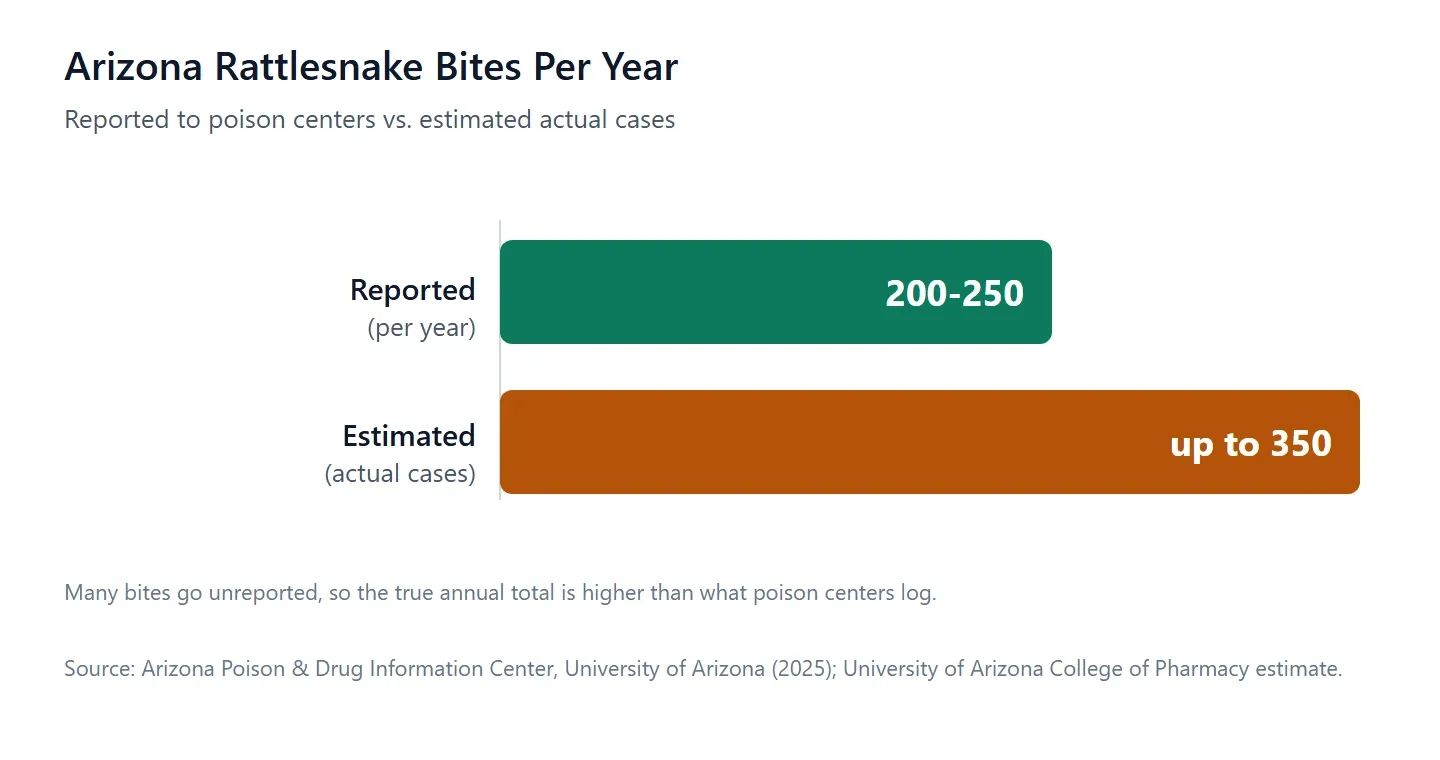
Arizona carries an outsized share of that risk. The Arizona Poison & Drug Information Center reports roughly 200 to 250 rattlesnake bites among Arizonans each year, and University of Arizona pharmacy experts have estimated the true figure runs as high as 350 once you account for bites that are never reported. Reassuringly, the center’s toxicologists note that fewer than 1% of bites have been fatal over the past 40 years but with prompt emergency care being the difference, keeping snakes out of the yard is the smart play.
The single most controllable risk factor is your own yard. As the Arizona Poison & Drug Information Center’s director, Steve Dudley, PharmD, put it: “Roughly 25% of our rattlesnake bites happen to people gardening or doing yardwork.” Keeping snakes out of the yard is the same project as keeping yourself and your family safer.
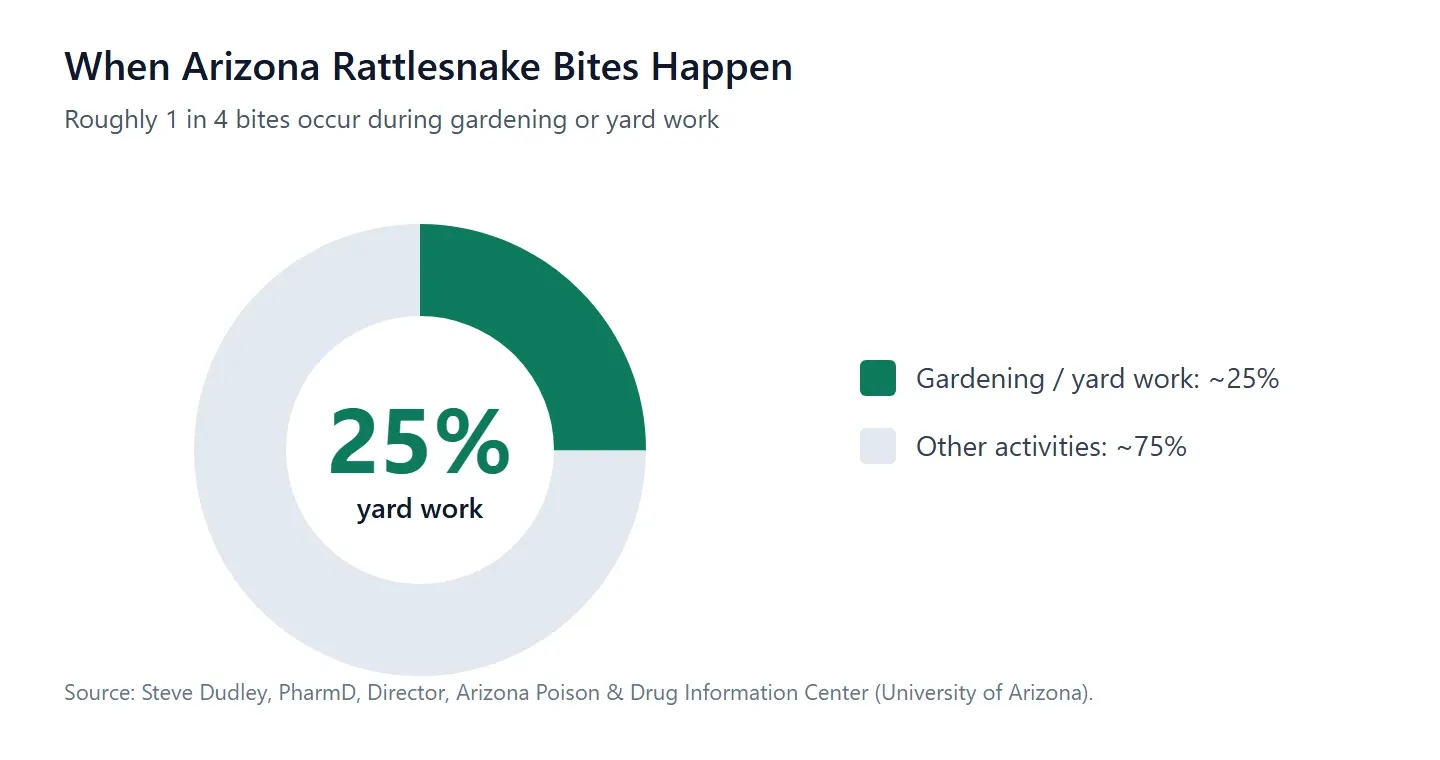
Roughly 1 in 4 Arizona rattlesnake bites happen during gardening or yard work.
7 proven ways to rattlesnake-proof your Arizona home and yard
Snake prevention works when you stack several measures together: take away the food, take away the shelter, and physically block the gaps. Here are the seven that actually move the needle.
1. Install snake fencing the right way
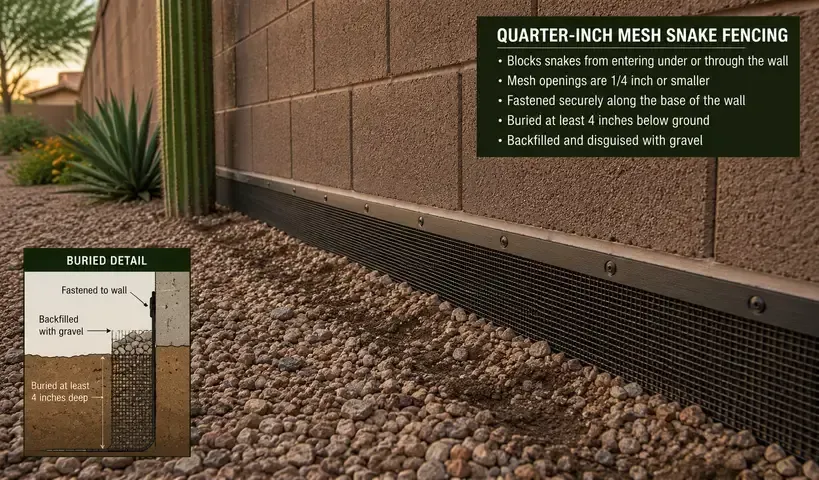
Physical exclusion is the only method that reliably keeps snakes out of a defined area. The University of Arizona’s guidance is specific: use fine mesh wire with openings no larger than a quarter inch, and bury it a few inches into the ground so snakes can’t slip underneath. The mesh should line the base of your existing wall or fence, with no gaps at gates. Done correctly, it turns your perimeter into a barrier; done loosely, snakes find the one weak seam.
2. Seal gaps around the house
A rattlesnake can pass through a surprisingly small opening, and a sheltered gap along your foundation is exactly the cool, hidden spot it’s hunting for. Seal weep holes with snake-safe covers, close gaps under gates and garage doors, and patch openings where pipes and conduit enter the home. This is the same exclusion work that keeps scorpions and rodents out, which is why our home sealing service tackles all three at once. (For the scorpion side of that job, see our guide on how to scorpion-proof your Arizona home.)
3. Control the rodents, you’re removing the snake’s food
This is the step homeowners skip, and it’s arguably the most important. Snakes follow prey. A yard with pack rats or roof rats is a yard that advertises free meals. The University of Arizona is blunt that minimizing rodent activity is central to snake prevention, because “snakes are often following their food source.” If you have a rodent issue, solving it removes the reason snakes keep returning, start with our guide to roof rats and pack rats in Arizona.
4. Clear the hiding spots
Rattlesnakes want cover. Remove it and your yard gets far less attractive:
- Haul off wood piles, debris piles, and old construction material.
- Clear brush and dense ground cover, especially along walls.
- Break apart pack-rat middens (those big stick-and-debris nests).
- Rethink stacked decorative rock and heavy boulders against the house, they create shaded, snake-friendly pockets.
You don’t have to strip your landscaping bare. The goal is to eliminate the dark, undisturbed nooks where a snake can sit unseen.
5. Manage water and irrigation
Standing water draws rodents, insects, and the snakes that eat them, especially during the dry foresummer and the monsoon. Fix leaking spigots and drip lines, don’t overwater, and eliminate pooling near the foundation. Tighter water management also helps with the broader pest pressure that ramps up in storm season, more on that in our Arizona monsoon pest control guide.
6. Keep the yard tidy and the grass short
Trimmed grass, pruned shrubs lifted off the ground, and a clutter-free yard give snakes nowhere to hide and make any snake that does pass through much easier to spot before you step near it. Pay special attention to the strip right along your block wall, where snakes like to travel.
7. Skip the gimmicks
Save your money on snake-repellent powders, granules, and ultrasonic “snake away” devices. The University of Arizona is clear that these products lack scientific support and are largely ineffective. The same caution applies to over-relying on a rattlesnake vaccine for pets, UArizona describes its scientific support as limited. Proven prevention is habitat control and exclusion, full stop.
What should you do if you find a rattlesnake in your yard?
If you encounter a rattlesnake, give it room and leave it alone, do not try to catch, kill, or move it yourself. Most bites to non-professionals happen when someone gets within striking range trying to handle or dispatch a snake. The Arizona Game & Fish Department emphasizes that snakes generally try to avoid people and strike only when they feel threatened.
Practical steps in the moment:
- Stop, step back, and keep a wide berth, at least the snake’s body length, ideally more.
- Keep children and pets indoors and away from the area.
- Watch the snake from a safe distance so you can tell a professional where it went.
- Call a professional for safe removal rather than risking a bite.
A snake passing through is one thing; a snake that has decided your yard is good habitat is another. If you’re seeing them repeatedly, that’s a sign to address the food and shelter problem, and to get a pro out for wildlife exclusion.
What should you do if someone is bitten?
A rattlesnake bite is a medical emergency, call 911 or get to an emergency room immediately for antivenom. While you arrange care, the CDC advises a clear list of dos and don’ts.
Do:
- Get emergency medical help right away.
- Stay as calm and still as possible, and keep the bitten limb roughly level.
- Remove rings, watches, and tight clothing before swelling starts.
- Gently wash the bite with soap and water and cover it with a clean, dry dressing.
- If you can do it safely, note the time and take a photo of the snake from a distance.
Do not:
- Do not apply a tourniquet, cut the wound, or try to suck or extract the venom.
- Do not apply ice or use electric shock or folk remedies.
- Do not take alcohol or over-the-counter pain relievers.
- Do not try to pick up or trap the snake, even a dead snake or a severed head can still envenomate.
For round-the-clock medical guidance, the Arizona Poison & Drug Information Center staffs a free hotline at 1-800-222-1222.
When should you call a professional?
Call a pro when you’re seeing snakes more than once, when you have known rodent activity, when your property backs to desert or a wash, or any time you simply don’t want to gamble on handling a venomous snake yourself. A professional does what a homeowner usually can’t: safely remove the snake, identify why it’s there, and close the gaps, rodents, harborage, and entry points, so the next one doesn’t follow.
At Patrick’s Home Solutions, we’re a locally headquartered, licensed and insured team (Lic# 9794) serving the entire West Valley, Surprise, Peoria, Glendale, Goodyear, Buckeye, Sun City, El Mirage, Avondale, and Anthem. Snake-proofing is exactly the kind of layered exclusion work we do every day.
Worried about rattlesnakes on your property? Call (623) 640-0405 for a free estimate, or request a quote online. We’ll assess your yard, handle removal, and seal the openings that keep wildlife coming back.
Frequently asked questions
What months are rattlesnakes most active in Arizona?
Rattlesnakes are generally active from March through October in Arizona, with bite reports climbing sharply in spring. During the hottest summer months they become mostly nocturnal, so you’re most likely to encounter one in the early morning or evening rather than midday.
Do rattlesnake repellents and ultrasonic devices work?
No. The University of Arizona reports that repellent powders, granules, and ultrasonic “snake away” devices lack scientific support and are largely ineffective. Reliable prevention comes from habitat control, removing food, water, and shelter, and physical exclusion with proper snake fencing.
What actually keeps rattlesnakes out of a yard?
The two things that work are exclusion and habitat control. Install quarter-inch mesh snake fencing buried a few inches into the ground, then remove what attracts snakes: control rodents, clear brush and wood piles, manage standing water, and seal gaps around the home where snakes can shelter.
How dangerous is a rattlesnake bite in Arizona?
Bites are serious but rarely fatal with prompt treatment. The CDC reports about 5 deaths a year nationwide from roughly 7,000-8,000 venomous bites, but 10-44% of rattlesnake bites cause lasting injury. Arizona sees an estimated 350 cases a year, so fast emergency care matters.
Why do I keep seeing snakes in my yard?
Repeated sightings almost always mean your yard is offering food or shelter, most often rodents, plus woodpiles, dense brush, or cool rock pockets. Snakes follow their prey, so an unresolved rodent problem is a common reason rattlesnakes keep returning.
Should I kill a rattlesnake I find in my yard?
No. Most bites to homeowners happen while trying to kill or move a snake. Give it space, keep people and pets away, and call a professional for safe removal. Even a dead rattlesnake can deliver venom through a reflex bite.
Sources
- Arizona Game & Fish Department, “Be ‘rattlesnake aware’ as temps heat up” (2025) https://www.azgfd.com/2025/03/25/be-rattlesnake-aware-as-temps-heat-up/ (retrieved 2026-06-30)
- University of Arizona Health Sciences / Arizona Poison & Drug Information Center, “Rattlesnake Bites on the Rise” https://healthsciences.arizona.edu/news/releases/rattlesnake-bites-rise-watch-where-you-step-says-uarizona-poison-center (retrieved 2026-06-30)
- Arizona Poison & Drug Information Center, via AZ Luminaria, “How to avoid rattlesnake bites in Arizona” (2025) https://azluminaria.org/2025/06/30/how-to-avoid-rattlesnake-bites-in-arizona-a-tucson-toxicologist-and-other-experts-share-safety-tips/ (retrieved 2026-06-30)
- Arizona Poison & Drug Information Center, “Rattlesnakes” https://azpoison.com/venom/rattlesnakes (retrieved 2026-06-30)
- U.S. Centers for Disease Control and Prevention (NIOSH), “Venomous Snakes” — https://www.cdc.gov/niosh/topics/snakes/default.html (retrieved 2026-06-30)
- Arizona State Parks, “Arizona Snakes” https://azstateparks.com/arizona-snakes (retrieved 2026-06-30)
This article is for general educational purposes and is not medical advice. If you or a pet is bitten by a rattlesnake, seek emergency medical care immediately or call the Arizona Poison & Drug Information Center at 1-800-222-1222.
About the author

Patrick Hagan
Owner, Patrick's Home Solutions
Patrick Hagan is the owner of Patrick's Home Solutions, a licensed and insured pest, wildlife, weed, and pigeon control company (AZ Lic# 9794) serving the Phoenix West Valley since 2016. The team specializes in identification-first, exclusion-based pest control that keeps cockroaches, scorpions, rodents, and other pests out of West Valley homes.
Read Patrick's storyReady for a Pest-Free Home?
Don't wait for pests to become a bigger problem. Contact Patrick's Home Solutions today for fast, reliable service across the Phoenix Valley.