Natural Pest Control at Home: What Works in Arizona and When to Call a Pro
Natural pest control handles many everyday pests in an Arizona home, though some desert pests push past what it can do. This article is for homeowners and renters in Surprise and across the West Valley who would rather try gentler methods first. It covers which approaches hold up against desert pests and how to tell when a problem needs a licensed professional.
Key Takeaways
Start with prevention: change the conditions pests rely on, and treat any pesticide as the last step instead of the first.
Call a professional when a pest keeps returning after you have done the prevention work, or when you cannot tell what the pest is.
Match the method to the pest by aiming at where it feeds or hides; for crickets, change the porch light before spraying anything.
Expect scorpions and crickets in a West Valley home, and watch for rodents if you live near a golf course or fruit trees.
What does natural pest control mean, and what doesn't it cover?
Natural pest control means keeping pests out by changing the conditions they need, so prevention comes first and pesticides come last, if at all. The EPA's integrated pest management principles describe that first line as managing the lawn or indoor space so pests never become a threat. The same guidance makes a point that saves a lot of worry: sighting a single pest does not always mean control is needed. A lone cricket in the garage is worth watching before you do anything about it.
Natural methods do not cover a population that is already established and breeding faster than prevention can catch up. At that point targeted treatment is the next step. If children or pets are the reason you went natural, safe pest control is where we explain how professional treatment works around them. We offer general pest control on a monthly or quarterly schedule. When a home needs more complete protection, we recommend monthly service for at least three months.
Natural methods that do the heavy lifting: sealing, sanitation, moisture and traps
The methods that carry the load take away a pest's reasons to come inside, and traps tell you whether they are working. NPMA's cockroach guide puts sanitation, moisture reduction and exclusion (sealing pests out) at the center of roach control, because roaches follow food debris and damp conditions. Ant control rests on the same work.
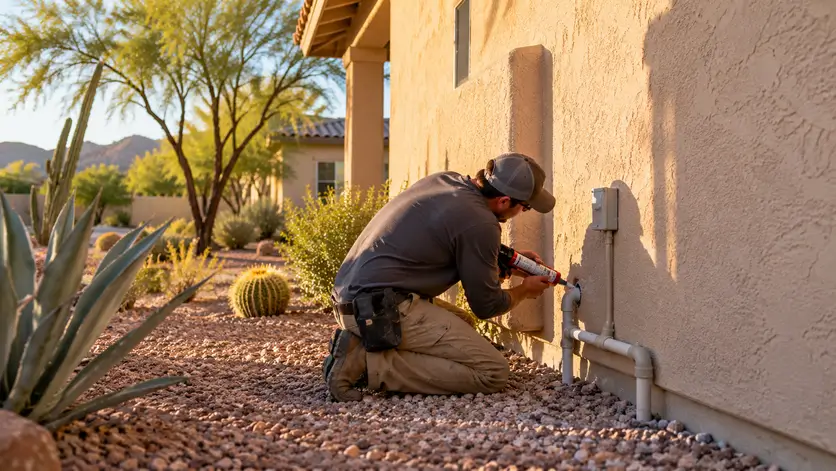
Sealing: The National Pest Management Association's ant guide calls for sealing cracks and crevices around the home, especially where utilities enter. Start under sinks and wherever pipes or wires pass through a wall. The same gap work is the first step in scorpion-proofing an Arizona home.
Sanitation: Keep trash in cans with sealed lids. Wipe up food and drink spills right away, and store sweets like honey in closed containers.
Moisture: Repair leaking pipes, and run a dehumidifier in any room that stays damp. A slow drip under a sink is the damp spot roaches look for.
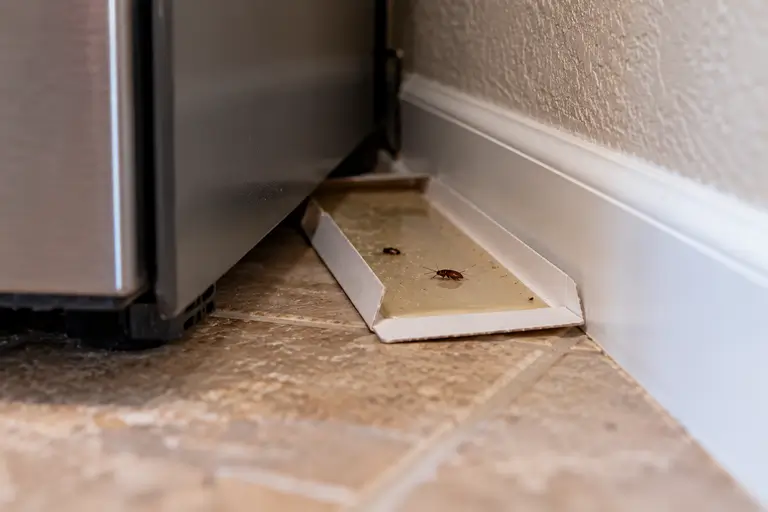
Traps: Sticky traps along baseboards and behind appliances catch what still gets in and show the path it takes. If the catch drops after you seal, the work is holding.
Which natural option works best for ants, roaches, crickets and garden pests?
Each pest has one natural option that outperforms the rest, and it targets where that pest feeds or hides. Crickets gather at porch lights after dark, so the bulb you use matters more than anything you spray. Roaches that keep turning up after the basics get their own treatment plan in our guide to cockroach control in Arizona.
Pest | Natural option that works best | Where it falls short |
|---|---|---|
Ants | Follow the trail to its entry point and close that gap | A colony nesting outdoors keeps sending workers |
Roaches | Clear out cardboard boxes and clutter they hide in | A population breeding inside walls |
Crickets | Swap white porch bulbs for yellow bug lights; fit door sweeps | Crickets breeding in yard debris near the foundation |
Garden pests | Hose aphids off leaves; hand-pick caterpillars | A plant already heavily infested |
Which pests do Phoenix-area homes face, and can you handle them yourself?
Across the West Valley, most homes deal with scorpions, crickets and general pests, and new home builds mainly see scorpions and crickets. Near a golf course or a yard with a lot of fruit trees, rodents join that list. Crickets and ants are the pests the sealing and sanitation work above can usually keep in check on your own. Ants turn up almost everywhere: in a Harris Poll survey for the National Pest Management Association, 51% of Americans encountered ants in their home. NPMA notes that indoors they mostly show up in kitchens and bathrooms, where food and moisture sit close together.
Why are bark scorpions so hard to control with natural methods?
Bark scorpions slip through gaps too small to spot, climb walls, and hide where a homemade spray never reaches them. That combination defeats most natural methods. Caulking narrows the ways in, but a bark scorpion can still find a crack you would never think to fill, and it can climb a rough stucco or block wall up to the eaves. A sticky trap may catch one now and then. It tells you little about where the rest are living.
They also hunt crickets and other insects, so a home with plenty of prey keeps drawing them back. Keeping that food supply down with general pest control makes the house less worth visiting.
The stakes run higher than with ants or crickets. The CDC's National Institute for Occupational Safety and Health warns that stings from a bark scorpion can be life-threatening and advises contacting a qualified health care provider or poison control center after a scorpion sting.
If bark scorpions keep turning up indoors, scorpion control is the service built for them. We do not charge to inspect a home for scorpions or for a home seal (closing the gaps scorpions use to get inside).
When should you stop experimenting and call a professional?
Call a professional when a pest keeps returning after you have sealed the gaps, fixed the leaks and cleared the food it was using. If your sticky traps keep filling at the same rate after that work, the source sits somewhere you cannot reach, often inside a wall or under a slab. Roaches out in daylight are another sign. So are bites on people or pets. If you cannot tell what the pest is, stop there: the right treatment depends on naming it first.
Which homemade sprays and baits are worth mixing, and what can they do?
A few homemade mixes help with small problems, but each one works only on the pests it touches.
Soapy water: plain dish soap in a spray bottle of water kills aphids and other soft-bodied garden pests on contact. Test one leaf first, since some plants scorch.
Vinegar and water: wiping an ant trail erases the scent workers follow. The colony itself is untouched.
Borax and sugar bait: workers carry the sweetened borax back to the nest. Keep it in a closed bait station, because borax is harmful if a child or pet eats it.
Homemade flea sprays fall shortest. A spray may knock down adult fleas, but eggs can still hatch afterward. That is why our own flea treatment includes a follow-up about 14 days later, around $60 depending on the size of the home.
If fleas or other pests keep coming back, contact Patrick's Home Solutions or call 623-640-0405, and we can give you the cost over the phone.
Sources
Integrated Pest Management (IPM) Principles | US EPA, U.S. Environmental Protection Agency (EPA), retrieved 2026-10-13.
Insects and Scorpions at Work | Outdoor | CDC, CDC/National Institute for Occupational Safety and Health (NIOSH), retrieved 2026-10-13.
Ant Identification Guides: Ant Control & Extermination, National Pest Management Association (NPMA), retrieved 2026-10-13.
Cockroaches Profile: Info, Photos, & Extermination, National Pest Management Association (NPMA), retrieved 2026-10-13.
About the author

Patrick Hagan
Owner, Patrick's Home Solutions
Patrick Hagan is the owner of Patrick's Home Solutions, a licensed and insured pest, wildlife, weed, and pigeon control company (AZ Lic# 9794) serving the Phoenix West Valley since 2016. The team specializes in identification-first, exclusion-based pest control that keeps cockroaches, scorpions, rodents, and other pests out of West Valley homes.
Read Patrick's storyReady for a Pest-Free Home?
Don't wait for pests to become a bigger problem. Contact Patrick's Home Solutions today for fast, reliable service across the Phoenix Valley.