Fleas & Ticks in Arizona: Protecting Your Home, Yard, and Pets
Key Takeaways
- Arizona’s main tick concern is the brown dog tick, which spreads Rocky Mountain spotted fever (RMSF) - a serious, sometimes fatal disease, per the CDC.
- RMSF became a serious Arizona problem: more than 250 cases and 19 deaths were reported from 2003-2012, with unusually high rates, especially among children.
- Unlike most ticks, the brown dog tick thrives in and around homes and yards year-round - so pets, yard, and home all matter together.
- There’s no RMSF vaccine, so prevention (pet tick control, yard treatment, tick checks) is everything; early doxycycline treatment is highly effective.
- Fleas and ticks both ride in on pets and wildlife - reducing habitat and treating the yard breaks the cycle.
Arizona doesn’t have the tick reputation that wetter states do, but it has a serious one that hits close to home - literally. The brown dog tick lives around houses and yards and can spread a life-threatening illness, especially to children and dogs. Here’s what every Arizona pet owner should know, and how to get fleas and ticks out of your home and yard.
This article is educational and not medical or veterinary advice. For symptoms, see a doctor; for pet products, consult your veterinarian.
Are there ticks in Arizona?
Yes - and the one that matters most is the brown dog tick (Rhipicephalus sanguineus). What makes it unusual, the CDC notes, is that it lives on and around domestic dogs - in yards, kennels, and even inside homes - rather than only out in wild brush. That means tick exposure in Arizona often happens right in your own yard, year-round, not just on hikes.
Fleas are the other warm-season nuisance, riding in on pets and wildlife, biting people and animals, and breeding fast in carpets, bedding, and shaded yard areas. Both pests share a common thread: they hitch onto pets and multiply where hosts and habitat are available.
What is Rocky Mountain spotted fever - and how serious is it in Arizona?
Rocky Mountain spotted fever is a bacterial disease (caused by Rickettsia rickettsii) spread through the bite of an infected tick. It can be severe and, without prompt treatment, fatal - and Arizona has been hit unusually hard. According to the CDC and Arizona Department of Health Services, more than 250 cases and 19 deaths were reported in Arizona between 2003 and 2012, with rates far above the national average, particularly among children.

The reassuring part: RMSF is very treatable when caught early. The CDC states that early treatment with doxycycline can prevent death and severe illness and is recommended for patients of all ages. There is no vaccine, so prevention and prompt medical care are the whole game. If anyone develops fever, headache, or rash after possible tick exposure, contact a doctor right away.
How do fleas and ticks get into your yard and home?
They arrive on hosts. Dogs are the main highway for brown dog ticks, but rodents and other wildlife carry ticks and fleas too - which is one reason rodent control is part of the picture. Once in the yard, ticks wait in shaded, sheltered spots and on kennels, fences, and walls; fleas breed in shaded soil, mulch, and pet resting areas. From there they move indoors on pets and clothing, and - with the brown dog tick - can even complete their life cycle inside the home.
How do you protect your pets?
Pets are both the first victims and the main carriers, so they’re the front line of defense:
- Use veterinarian-recommended flea and tick prevention year-round - your vet will match the product to your pet.
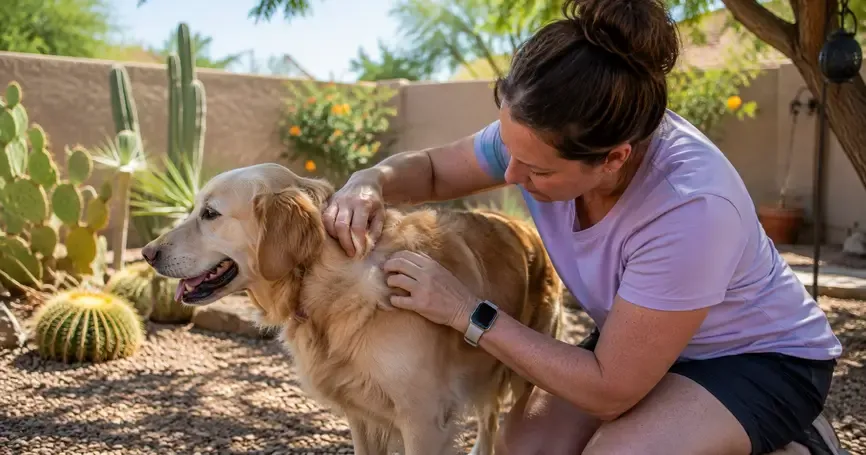
- Check dogs for ticks after time outdoors, especially around the ears, neck, toes, and under the collar.
- Remove attached ticks properly - grasp close to the skin with tweezers and pull straight out; don’t crush it.
- Wash pet bedding regularly and treat pet resting areas.
Because product choices depend on your animal’s age, health, and weight, always follow your veterinarian’s guidance rather than guessing.
How to get rid of fleas and ticks in your yard
Breaking the outdoor cycle is where a lot of the battle is won - and lost:
- Mow and clear. Keep grass short and remove leaf litter, brush, and debris where ticks and fleas shelter.
- Treat the hot spots. Focus on shaded areas, pet runs, kennels, fence lines, and along walls where ticks congregate.
- Manage wildlife and rodents. Remove food, water, and harborage that draw the animals carrying ticks and fleas.
- Reduce moisture. Fix overwatering and standing water that support flea development.
- Professional yard treatment. A targeted barrier treatment of resting and breeding areas knocks down populations far more effectively than spot spraying.

The three layers work together - treating the yard while skipping pet prevention (or vice versa) leaves a gap the pests exploit.
When should you call a professional?
Call a pro when you’re finding ticks on pets or in the home, when fleas keep coming back despite treatment, when you back up to desert or wash habitat, or any time RMSF risk has you wanting the yard handled properly. A professional treats the resting and breeding areas, reduces the wildlife and rodent pressure feeding the problem, and maintains a barrier through the warm season.
At Patrick’s Home Solutions, we’re locally headquartered, licensed and insured (Lic# 9794), and serve the entire West Valley. We handle the pest control side - yard and home - so your veterinarian can focus on your pets.
Fighting fleas or worried about ticks? Call (623) 640-0405 for a free estimate, or request a quote online. We’ll treat the yard and home so the whole household - pets included - stays protected.
Frequently asked questions
Are there really dangerous ticks in Arizona?
Yes. The brown dog tick lives in and around Arizona homes and yards year-round and can spread Rocky Mountain spotted fever, a serious disease. Arizona has seen unusually high case and death rates, so tick prevention around the home matters here more than many people realize.
How common is Rocky Mountain spotted fever in Arizona?
It became a significant problem - more than 250 cases and 19 deaths were reported in Arizona from 2003 to 2012, per the CDC and state health data, with rates especially high among children. It remains monitored, and prevention plus early treatment are the keys to avoiding severe outcomes.
How do I get rid of fleas in my yard?
Mow and clear leaf litter and debris, treat shaded areas and pet resting spots, reduce moisture and standing water, and manage the rodents and wildlife that carry fleas. Combine yard treatment with veterinarian-recommended pet prevention to break the life cycle.
How do I protect my dog from ticks?
Use veterinarian-recommended tick prevention year-round, check your dog after outdoor time (ears, neck, toes, under the collar), remove attached ticks with tweezers by pulling straight out, and treat the yard. Ask your vet which product fits your dog’s age, weight, and health.
What are the symptoms of Rocky Mountain spotted fever?
RMSF can cause fever, headache, and rash after a tick bite, and it can become serious quickly. This article isn’t medical advice - if you or a family member has these symptoms after possible tick exposure, contact a doctor right away, since early doxycycline treatment is highly effective.
Sources
- U.S. Centers for Disease Control and Prevention, “About Rocky Mountain Spotted Fever” - https://www.cdc.gov/rocky-mountain-spotted-fever/about/index.html (retrieved 2026-08-05)
- U.S. Centers for Disease Control and Prevention, “Clinical Overview of RMSF” (transmission & epidemiology) - https://www.cdc.gov/rocky-mountain-spotted-fever/hcp/clinical-overview/index.html (retrieved 2026-08-05)
- Maricopa County, “Rocky Mountain Spotted Fever” - https://www.maricopa.gov/1737/Rocky-Mountain-Spotted-Fever (retrieved 2026-08-05)
- NPR, “Fighting Rocky Mountain Spotted Fever, and the ticks that cause it, in Arizona” (2025) - https://www.npr.org/sections/shots-health-news/2025/01/15/nx-s1-5256227/rocky-mountain-spotted-fever-ticks-dogs (retrieved 2026-08-05)
About the author: Patrick Hagan is the owner of Patrick’s Home Solutions, a licensed and insured pest, wildlife, weed, and pigeon control company (AZ Lic# 9794) serving the Phoenix West Valley since 2016. The team provides yard and home flea and tick control that complements your veterinarian’s care to protect West Valley families and pets.
This article is for general educational purposes and is not medical or veterinary advice. For symptoms of tick-borne illness, contact a healthcare provider; for flea and tick products for your pet, consult your veterinarian.
Ready for a Pest-Free Home?
Don't wait for pests to become a bigger problem. Contact Patrick's Home Solutions today for fast, reliable service across the Phoenix Valley.