Scorpion Control in Surprise, AZ: Complete Homeowner's Guide
Scorpion Control in Surprise, AZ: Complete Homeowner's Guide

Scorpion control in Surprise, AZ means two things: a chemical perimeter treatment that kills active scorpions around your home, and a physical home seal that closes the entry points they use to get inside. In the Phoenix West Valley — where the Arizona bark scorpion thrives at the edge of Sonoran Desert development — most homeowners need both.
With bark scorpion sting rates of 677 per 100,000 residents, Phoenix leads every major U.S. city. This guide covers what professional scorpion control in Surprise actually involves, which neighborhoods carry the highest risk, when to treat, and how to decide whether home sealing is right for your property.
Key Takeaways
- The University of Arizona Extension's Scorpions of the Desert Southwest United States (2018) documented bark scorpion stings at 677 per 100,000 in Phoenix — the highest of any major U.S. city — and confirmed 98% of exposures happen in or around the home
- Effective control in Surprise requires two steps: perimeter chemical treatment (reduces active scorpion populations) plus home sealing (closes structural entry points)
- Bark scorpion females carry 25–35 live young per birth; one untreated season compounds into a multi-year infestation problem
- Children 9 years old or younger who are stung require immediate emergency care — all adult stings: call AZ Poison Control at 1-800-222-1222
Why Does Surprise Have One of Arizona's Worst Scorpion Problems?
In 2018, the University of Arizona Extension's Scorpions of the Desert Southwest United States documented that Phoenix carries the highest bark scorpion sting rate of any major U.S. city: 677 stings per 100,000 residents. Tucson comes second at 584. El Paso, Oklahoma City, Las Vegas — none come close to a third of Phoenix's rate. The West Valley doesn't just have a scorpion problem. It has the scorpion problem.

Bark scorpion sting rates per 100,000 residents by major U.S. city. Phoenix and Tucson are in a category of their own.
Why is the West Valley hit so hard? Three factors converge here more than almost anywhere else in Arizona.
Desert interface. Surprise, Peoria, El Mirage, and the Waddell corridor were built directly on formerly undeveloped Sonoran Desert. Grading a subdivision doesn't relocate scorpions — it displaces them into the nearest shelter, which is often the finished home next door. The newer the development, the more intense that displacement pressure.
Perimeter block walls. Nearly every Surprise yard is enclosed by a hollow concrete masonry block wall. In 2018, the same UA Extension publication confirmed that 95% of scorpions prefer hollow block walls for harborage over all other options. These walls run contiguously from yard to yard — often from desert-adjacent parcels deep into established subdivisions — creating a connected harborage corridor the length of an entire neighborhood.
Bark scorpion biology. The Arizona bark scorpion (Centruroides sculpturatus) is the only scorpion species of medical concern in the United States. Its lifespan runs five to seven years, and females give birth to between 25 and 35 live young — carried on the mother's back for up to three weeks — after a gestation of roughly nine months. One untreated property doesn't just produce scorpions this season. It builds a population that compounds over years.
The block-wall corridor — what competitors miss: Perimeter block walls are almost universal in Surprise, and they're almost always hollow. According to the University of Arizona Extension's Scorpions of the Desert Southwest United States (2018), 95% of scorpions prefer hollow block walls over every other harborage option. What that means locally: every perimeter wall in a Surprise neighborhood is likely a connected scorpion highway — running from desert-adjacent land directly to your home's foundation. Treating the yard helps. Understanding what's living inside the walls changes the approach entirely.
The University of Arizona Extension's Scorpions of the Desert Southwest United States (2018) also confirmed that 98% of bark scorpion exposures occur in or around the home. This isn't a backyard pest you occasionally encounter near a wash. It's an indoor threat that enters through structural gaps, forages inside at night, and hides in wall voids during daylight hours.
Which Type of Scorpion Control Does Your Surprise Home Actually Need?

In 2018, the University of Arizona Extension's Scorpions of the Desert Southwest United States stated plainly: pest-proofing is "by far the most effective way to reduce scorpion contact." That conclusion points to two distinct services — and understanding what each does, and doesn't do, matters before you call anyone.
Perimeter barrier treatment applies professional-grade residual insecticide to the home's exterior foundation, eaves, block walls, and known harborage zones. These products create a kill zone for scorpions that contact treated surfaces. A proper application covers the full perimeter and the adjacent vegetation and block walls where scorpions spend daylight hours. Quarterly retreatment maintains that barrier across the full seasonal cycle — the March ramp-up, the June–August peak, and the September–October tail.
Treatment is effective and necessary. It's also not permanent. Scorpions from adjacent desert parcels, untreated block walls, and neighboring properties will keep pushing against the treated perimeter. Quarterly service manages that pressure; a single annual application doesn't.
Scorpion home sealing is a separate process: a systematic, full-exterior inspection and physical closure of every structural entry point the scorpion can use. Bark scorpions can compress their bodies to the thickness of a credit card — gaps around door sweeps, weep screeds, utility penetrations, and roofline transitions are all viable entry routes. Sealing physically closes those vulnerabilities, which is the only thing that stops interior encounters long-term.
Done together, treatment and sealing address both sides of the problem: population reduction outside and structural exclusion inside. Most Surprise homeowners on high-pressure lots need both.
What we find in Surprise stucco homes: The entry point most homeowners read about online is the "weep hole." Weep holes are a brick-construction detail. Surprise is stucco. What stucco homes have are weep screeds — intentional drainage gaps that run the full length of stucco walls at the base, and they require a different sealing approach than the isolated holes brick-construction guides describe. We also consistently find unsealed gaps at AC refrigerant line penetrations, dryer vent transitions, and garage door bottom seals — areas that appear closed from the outside but leave enough space for a bark scorpion. These are the entry points that keep showing up in Surprise homes, and they're almost never mentioned by general-market competitors.
A professional home seal takes two to four hours depending on the property size and the number of entry points identified. Most clients see a significant drop in indoor sightings within weeks of a seal — not because the scorpions are gone from the yard or block walls, but because they can't get inside.
Per the University of Arizona Extension's May 2025 IPM Newsletter, approximately 90% of adult bark scorpion sting cases can be managed at home with Poison Help Hotline guidance. The 10% that can't are disproportionately children, elderly adults, and individuals with compromised immune systems — which is exactly why reducing indoor encounters matters most.
Visit our scorpion home sealing service page for a full breakdown of what the sealing process includes.
How Does Patrick's Treat Homes for Scorpions in Surprise?

Professional scorpion treatment in Surprise isn't a one-size approach — the property layout, adjacent land use, and construction type all shape what the service looks like. Here's what our process actually involves, from first call to completed treatment.
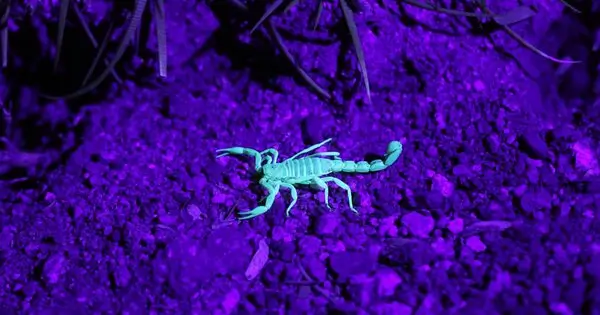
Step 1: UV Inspection. Bark scorpions fluoresce under ultraviolet light — they glow bright blue-green in the dark. Per the University of Arizona Extension's May 2025 IPM Newsletter, the most productive detection window is between 8pm and 11pm. We use black light equipment to scan the home's interior and exterior before any product is applied. This shows us where the pressure is concentrated: active scorpions, block wall harborage, and the specific entry points worth addressing in the sealing phase.
Step 2: Perimeter Treatment. We apply professional-grade residual insecticide to the exterior foundation, eaves, block walls, landscape vegetation adjacent to the structure, and all identified harborage areas. Products are fully licensed for residential application in Arizona under AZ ODA License #9794 and are safe for families and pets once dry — typically 30–60 minutes after application.
Step 3: Entry Point Documentation. During the treatment visit, the technician records all structural vulnerabilities: weep screeds, pipe penetrations, garage door seal condition, window frame gaps, roofline transitions. That list goes to the homeowner with a plain-language explanation of what each finding means.
Step 4: Home Sealing (if included in the service plan). A licensed crew addresses every documented entry point using the correct material for each gap type. Weep screeds get screened — not caulked — so the drainage function stays intact. Utility penetrations get foam-sealed at the collar. Garage door sweeps are replaced or adjusted to full contact with the threshold. This step takes two to four hours.
Step 5: Ongoing Quarterly Maintenance. Quarterly retreatment is standard for the Phoenix West Valley. It covers the full cycle, including the clustering period when scorpions concentrate in block walls and wall voids. Between visits, we recommend running a UV light scan of the home's exterior on a few summer evenings — it's the fastest way to see whether activity is increasing between treatments.
What you won't get from Patrick's Home Solutions: services recommended because they add to the invoice. If your property's construction and location don't warrant a home seal, we say so. If treatment alone is the right call, that's what we quote.
Visit our scorpion control service page for current scheduling and service area details.
Which Surprise Neighborhoods Have the Most Scorpion Activity?

Not every part of Surprise carries the same scorpion pressure. Proximity to undeveloped desert, desert wash corridors, and active construction are the primary variables. Here's how the neighborhoods we service most frequently break down.
Prasada and Prasada North. The highest short-term risk of any area in our service territory. Active construction continues grading adjacent desert land, displacing scorpions into completed homes nearby. Don't wait for a sighting before scheduling treatment — treat within the first season of moving in.
Surprise Farms and Rancho Gabriela. Both communities sit adjacent to undeveloped desert parcels to the north and northwest. Baseline scorpion activity is consistently higher here than in interior neighborhoods, and block walls bordering undeveloped land carry significant harborage populations that push into yards seasonally.
The Waddell Corridor (near Highway 303). Semi-rural interface with the highest overall activity in our service territory. Clients here typically see scorpions in the yard year-round, with peak indoor pressure between June and August. Both treatment and sealing are almost always warranted at this interface.
Marley Park. A more established community with mature landscaping and a managed tree canopy. Lower displacement pressure than newer developments, but block wall harborage and adjacent HOA common areas still create population pathways. Rock mulch along perimeter fencing is a consistent harborage zone in our Marley Park inspections.
Arizona Traditions and Sun City Grand. Well-maintained established communities where scorpion activity is present but typically at lower intensity than desert-interface neighborhoods. Rock ground cover throughout these communities provides preferred harborage — regular quarterly treatment keeps populations manageable and is usually sufficient without a full home seal.
Learn more about our service area and neighborhoods we cover in Surprise, AZ.
When Is Scorpion Season in the Phoenix West Valley?
In its May 2025 IPM Newsletter, the University of Arizona Cooperative Extension stated directly: Arizona bark scorpions are active for most of the year in low-desert areas whenever nighttime temperatures stay above 70°F. In Surprise, that threshold is met most nights from March through October — and on warm winter evenings, scorpions remain active even when the calendar says otherwise.
"Scorpion season" suggests an off-season when treatment can wait. There isn't one.

Bark scorpion activity across the Phoenix West Valley by month. "Low" doesn't mean absent — scorpions cluster in hollow
Here's what each period actually looks like on the ground:
November–February (Low / Clustering). Scorpions don't hibernate — they cluster. In 2018, the UA Extension's Scorpions of the Desert Southwest United States documented that during the coldest months, bark scorpions aggregate in protected, enclosed spaces called hibernacula: hollow block walls, attic spaces, and interior wall voids. They're concentrated, less mobile, and less likely to be encountered in the open. But they're present, and they sting when disturbed.
March–May (Ramp-up). Activity resumes as nighttime temperatures climb back above 70°F. First indoor sightings of the season typically show up in March. This is the right moment to schedule spring treatment — before the population is fully active, not after the first scorpion appears inside.
June–August (Peak). The most active and most dangerous period. Per the University of Arizona Extension's May 2025 IPM Newsletter, bark scorpions forage most intensively between 7pm and 11pm and again between 3am and sunrise. Monsoon rains — which typically begin in late June or early July — increase insect prey populations near homes, drawing scorpions closer to the structure. This is when we field the most calls.
September–October (Tail season). Activity decreases but remains significant through October. Warm falls extend the tail, and clients in desert-interface neighborhoods like Waddell and Surprise Farms often see interior sightings through mid-October.
The practical implication: quarterly treatment covers all four periods, including the winter clustering phase when scorpions concentrate in block walls and wall voids. A summer-only schedule leaves the March–May ramp-up completely unprotected.
In its May 2025 IPM Newsletter, the University of Arizona Cooperative Extension confirmed that Arizona bark scorpions remain active in low-desert areas whenever nighttime temperatures exceed 70°F — a threshold met throughout most of the year in Surprise. During cooler months, scorpions cluster in hollow block walls and wall voids rather than becoming inactive, maintaining the risk of indoor encounters year-round in the Phoenix West Valley.
What Are the Signs You Have a Scorpion Problem — and When to Call?
One scorpion inside doesn't necessarily mean an infestation — bark scorpions are opportunistic, and a single individual can find its way through a gap you haven't noticed. But certain patterns mean professional intervention is the right call.
Reach out to us when:
- You've found two or more scorpions inside your home within a single week
- A scorpion appeared in a bedroom, child's room, or near a crib or cot
- You've found scorpions in shoes, clothing, towels, or bedding
- You're moving into a home with no prior treatment history — especially in Prasada, the Waddell corridor, or any desert-adjacent parcel
- You've had multiple sightings and can't identify a single entry point
Use a UV flashlight before you call. Bark scorpions glow bright blue-green under ultraviolet light. A UV scan of your home's exterior after dark — particularly block walls, window frames, weep screeds, and garage perimeters — will show you what daytime inspection misses. Run it between 8pm and 11pm. If you find scorpions on the block wall within three feet of your home's foundation, treatment is warranted.
If someone is stung: Per the University of Arizona Extension's May 2025 IPM Newsletter, approximately 90% of adult bark scorpion sting cases can be managed at home. Call Arizona Poison Control at 1-800-222-1222 — they're available 24/7 and will walk you through first aid. Most healthy adults recover within 24–72 hours with over-the-counter pain relief.
Children need a different response. Per the University of Arizona Extension's May 2025 IPM Newsletter, children 9 years old or younger — or weighing less than 70 pounds — who are stung require a 911 call or immediate ER visit. Don't wait for symptoms to escalate. Signs in young children include muscle twitching, uncontrolled eye movements, excessive drooling, and difficulty breathing. Banner Health Poison Control: 1-800-222-1222.
──────────────────────────────────────────────────
Ready to Protect Your Home Before Scorpion Season Peaks?
Scorpion activity ramps up in March and hits peak intensity between June and August. The most effective time to schedule treatment is before the first sighting of the season — not after.
Patrick's Home Solutions serves Surprise, Peoria, El Mirage, Glendale, and the greater Phoenix West Valley with licensed technicians (AZ ODA License #9794) and a transparent two-step process: perimeter treatment plus home sealing for properties that need it. Family-safe products. Same-day and next-day availability. No services recommended unless they're warranted.
Call (623) 640-0405 or a free estimate, or view schedules and service details online.
──────────────────────────────────────────────────
Frequently Asked Questions
How often should I treat my home for scorpions in Arizona?
Quarterly service — every three months — is the standard for Surprise and the Phoenix West Valley. It covers the full annual cycle: the March ramp-up, the June–August peak, the September–October tail, and the winter clustering period. Once-a-year treatment leaves most of the active season exposed. Per the University of Arizona Extension, bark scorpions are active in low-desert areas whenever nighttime temperatures stay above 70°F — which in Surprise is most of the year.
What kills scorpions permanently in Arizona?
Nothing eliminates them permanently. Bark scorpions are established across the Sonoran Desert, and adjacent properties will always generate some population pressure. The closest thing to long-term control is combining quarterly chemical treatment — which keeps active populations down — with a professional home seal that closes structural entry points. Most clients on that combined plan see dramatic reductions in indoor encounters without eliminating scorpions from the surrounding environment entirely.
Are bark scorpions dangerous to pets?
Yes. Dogs and cats are susceptible to bark scorpion venom, with small pets facing greater risk due to lower body weight. If your pet is stung, contact the ASPCA Animal Poison Control Center at 888-426-4435. Watch for drooling, muscle tremors, difficulty walking, or collapse. Most pets recover with veterinary guidance, but small dogs and cats warrant an immediate vet call. Keep water bowls and pet bedding off the floor during treatment — and off the ground outdoors — to reduce contact risk.
How quickly can Patrick's respond to a call in Surprise?
Same-day and next-day scheduling is available for Surprise, Peoria, El Mirage, and Glendale. Call (623) 640-0405 — calls received before noon are often dispatched the same day. Situations involving a scorpion found in a child's room, multiple indoor sightings in 24 hours, or a recent sting are prioritized. We serve the entire West Valley from our Surprise base and don't subcontract local calls.
How much does scorpion control cost in Surprise, AZ?
Pricing depends on home size, property layout, and whether the service plan includes treatment only or a combined treatment-and-seal package. We don't publish one-size pricing because the right scope differs by property. Call (623) 640-0405 — we'll assess what your property needs and quote you exactly that, not a menu of add-ons.
Does scorpion home sealing actually work?
When done correctly, yes — it's the most structurally effective defense available. Home sealing doesn't eliminate scorpions from your yard or block walls. It stops them from getting inside. Most clients report a significant drop in interior encounters after a professional seal. The key is thoroughness: every entry point addressed with the right material for that gap type. A partial seal — one that misses the weep screeds or leaves utility penetrations open — won't deliver the same result. That's why we document every point before and after the work.
Is scorpion treatment safe during pregnancy or for infants?
Professional-grade products applied by Patrick's are registered for residential use and are safe for household members once the treated surface is fully dry — typically 30–60 minutes after application. If you're pregnant or have an infant at home, let us know when you book. We'll work around schedules, ventilate treated areas, and avoid interior applications where any concern exists. We don't apply products we wouldn't be comfortable using in our own homes.
──────────────────────────────────────────────────
Scorpions aren't going anywhere. The Sonoran Desert is their habitat, and every neighborhood built into it will share space with them. What professional control changes is the risk inside your home — which is where 98% of stings actually happen, according to the University of Arizona Extension.
The two-step approach is the honest answer: treatment keeps active populations down; sealing closes the door. For most Surprise homeowners, especially those in Prasada, Surprise Farms, and the Waddell corridor, both are worth the investment — particularly with a species that lives five to seven years and can produce 35 young in a single birth.
The short list before season peaks:
- Schedule quarterly treatment before March — before the first scorpions become active, not after
- Consider a home seal if you're in a high-pressure neighborhood or a newer development built near desert land
- Run a UV light scan on your exterior block walls after dark to gauge current activity
- Know the Poison Control number: 1-800-222-1222 (adults); 911 or ER for children under 9
Call (623) 640-0405 or visit our scorpion control service page to book before the season peaks.
──────────────────────────────────────────────────
Written by Patrick Hagan, Licensed Pest Control Operator | AZ ODA License #9794 | ROC #356260 Patrick's Home Solutions has served Surprise, AZ and the Phoenix West Valley since 2016. BBB A+ Accredited. 4.9 stars across 432+ Google reviews.
──────────────────────────────────────────────────
Sources
1. University of Arizona Extension, Scorpions of the Desert Southwest United States, published May 2018, retrieved 2026-05-18, https://acis.cals.arizona.edu/community-ipm/community-ipm-output/publications/publications-view/scorpions-of-the-desert-southwest-united-states 2. University of Arizona Cooperative Extension, IPM Newsletter: Scorpion Season Is Here!, May 2025, retrieved 2026-05-18, https://acis.cals.arizona.edu/community-ipm/home-and-school-ipm-newsletters/ipm-newsletters/2025/05/16/scorpion-season-is-here!
3. Arizona Poison and Drug Information Center, Scorpions, retrieved 2026-05-18, https://azpoison.com/venom/scorpions
4. Wikipedia, Arizona bark scorpion, retrieved 2026-05-18, https://en.wikipedia.org/wiki/Arizona_bark_scorpion
5. Banner Health, Bark Scorpions — Poison and Drug Information, retrieved 2026-05-18, https://www.bannerhealth.com/services/poison-drug-information/desert-critters/bark-scorpions
──────────────────────────────────────────────────
Ready for a Pest-Free Home?
Don't wait for pests to become a bigger problem. Contact Patrick's Home Solutions today for fast, reliable service across the Phoenix Valley.